Monday, April 11, 2016

Bank Bail Ins Begin as EU Bank “Bailed In” In Austria

Published here: http://www.zerohedge.com/news/2016-04-11/bank-bail-ins-begin-eu-bank-%E2%80%9Cbailed-in%E2%80%9D-austria

Bank Bail Ins Begin as EU Bank “Bailed In” In Austria

Bank bail ins in the EU are here after Austria's financial markets regulator FMA imposed a hefty haircut on creditors in an Austrian bank. Creditors in the bank Heta Asset Resolution will receive less than half of their money back according to the country’s financial regulator, the FMA.

euro_drachma

Senior bondholders in the so called “bad bank” could expect to receive around €0.46 for each euro which would be paid from the realisation of assets by 2020, according to the FMA statement. It said that this had been calculated using “very conservative” assumptions.

“This package of measures also ensures the equal treatment of creditors. Orderly resolution is more advantageous than insolvency proceedings,” the FMA said.

Bond maturities, however, will be extended to 31 December 2023 as “all currently outstanding legal disputes will realistically only be concluded by the end of 2023”. “Only at that point will it be possible to finally distribute the assets and to liquidate the company,” the regulator said.

In November 2015, the largest collection of creditors, which included Pacific Investment Management Co (PIMCO), Commerzbank , FMS Wertmanagement AoeR and a collection of distressed debt investors, proposed to extend bond maturities for 30 years in return for repayment in full.

Representatives of Austrian province Carinthia and creditors of the failed regional lender are to meet in London tomorrow to try to break the impasse over a bond buyback scheme, an Austrian newspaper reported. Carinthia, a southern Austrian province, guaranteed the debt of local lender Hypo Alpe Adria before the bank collapsed and now faces the threat of insolvency if it had to honour the 10.8 billion euro ($12.3 billion) debt in full.

Heta Asset Resolution was formed to wind down the bank but regulators froze Heta's debt repayments after discovering a gaping capital hole at the bad bank.

Heta's bail-ins pertain to bond holders but it is important to note that recently introduced EU and international bail-in regulation mean that depositors in banks are now exposed to having their deposits bailed in.

Bail-ins are one of the greatest financial risks to investors, savers and indeed companies today. Yet they remain the most poorly covered financial risk and are largely ignored by financial advisers, brokers and not surprisingly banks.

There is a belief that bail-ins only relate to "the rich" and very wealthy depositors as they will be imposed on those with deposits greater than national deposit guarantees. These deposit "guarantees" are generally the 'big round', arbitrary number of say €100,000, $250,000 and £75,000. These are not particularly large amounts and could amount to the entire life savings of a family or pensioners or indeed it could be the entire capital of a small to medium size business enterprise.

There is a belief that bail-ins only relate to "the rich" and very wealthy depositors as they will be imposed on those with deposits greater than national deposit guarantees. These deposit "guarantees" are generally the 'big round', arbitrary number of €100,000, $100,000 and £75,000. This is not a particularly large amount and could amount to the entire life savings of a family or pensioners or indeed it could be the entire capital of a small to medium size business enterprise.

bail-ins-considerationsBail-Ins – Key Considerations (GoldCore Research)

Media internationally has not analysed this growing financial risk and the risk that it poses to the deposits of savers, investors and companies and indeed to our respective economies. In a world already beset with huge deflationary pressures, bail-ins and confiscating deposits  would be extremely deflationary and would likely contribute to severe recessions.

This is something we warned of when we first conducted our extensive research on the developing bail-in regimes. Diversification of deposits remains vital and one important way to protect against bail-ins is owning bullion. Taking delivery of gold and silver coins and bars or owning bullion in allocated and segregated storage in the safest vaults in the world is a prudent way to protect against bail-ins.

Access Protecting your Savings In The Coming Bail-In Era (11 pages)

Access From Bail-Outs to Bail-Ins: Risks and Ramifications - (51 pages)


Gold Prices (LBMA)

11 April: USD 1,247.25, EUR 1,095.84 and GBP 878.96 per ounce
8 April: USD 1,235.00, EUR 1,085.18 and GBP 877.33 per ounce
7 April: USD 1,237.50, EUR 1,086.07 and GBP 879.70 per ounce
6 April: USD 1,225.75, EUR 1,079.76 and GBP 868.38 per ounce
5 April: USD 1,231.50, EUR 1,083.59 and GBP 866.32 per ounce

Silver Prices (LBMA)
11 April: USD 15.16, EUR 13.34 and GBP 10.78 per ounce  (Not updated yet)
8 April: USD 15.16, EUR 13.34 and GBP 10.78 per ounce
7 April: USD 15.22, EUR 13.38 and GBP 10.81 per ounce
6 April: USD 15.07, EUR 13.28 and GBP 10.71 per ounce
5 April: USD 15.19, EUR 13.37 and GBP 10.69 per ounce

silver_britannias
Silver Britannias - VAT Free

Gold News and Commentary

Gold climbs to near 3-week high on safe-haven demand (Reuters)
Gold Nears Three-Week High as Fed Outlook on Rates Erodes Dollar (Bloomberg)
Obama, Yellen in unexpected meeting Monday to talk economy (Marketwatch)
Now, India’s very own gold coins (Hindu Business)
China goes prospecting for world's gold mines (WSJ)

Gold's "run is far from over" (CNBC)
Gold Defies Stock Bear Rally (Gold Seek)
Myths About Gold That Just Won’t Die (Zero Hedge)
Standby for terrible news from Wall Street ... (Yahoo Finance)
Dead Canaries And Disobedient Falcons: Bad Month Coming, Especially For Banks (Dollar Collapse)

Read More Here


www.GoldCore.com

Sunday, April 10, 2016

Full-Blown Panic Mode At The Fed?

Published here: http://www.zerohedge.com/news/2016-04-10/full-blown-panic-mode-fed

Fed

Someone seems to have hit the emergency button at the Fed, as even though the central bank said that everything was just fine with the American economy just a few weeks and months ago, the situation has currently escalated into a full-blown panic mode.

On Thursday, the Board of Governors of the Federal Reserve has called an ‘emergency’ meeting for Monday, April 11. That by itself is already very surprising, but a lot can be explained after looking at the most recent publication of the Atlanta Fed. The results of the forecasted GDP of the Atlanta Fed, should push a lot of people and investors into a depression. Just eight weeks ago, the Atlanta Fed forecasted GDP growth of approximately 2.5%, which would’ve been a very healthy growth rate, and even on March 11, the Fed was still expecting the GDP to grow by 2.3%.

Atlanta Fed

Source: GDPnow, through Atlanta Fed

But since then, everything started to go downhill. In just four weeks time, the Atlanta Fed has revised its GDP growth rate from 2.3% to just the 0.1%, which means are basically at the tipping point between a growing economy and the first signs of a new recession. Whatever the final outcome will be, it is now pretty clear that the economy in the United States is stalling. And the rate at which the economy seems to be crumbling is really terrifying.

Fed GDP Growth Rate

Source: tradingeconomics.com

Just two weeks ago we started to warn you for this, as a corporate profits are going down, and the increases in EPS were mainly boosted by the companies’ share buyback programs and not by higher net profits. We were also very worried to see that a lot of companies are overspending on share buybacks, rather than strengthening their balance sheets and we were afraid this would return into the spaces like a boomerang.

This also seems to be confirmed by the Money Flow Index of the S&P index. The last time we have reached an 'overbought' status on that indicator, the S&P fell by 15% just a few weeks later. Will we re-experience a similar sell-off now?

Fed SP MFI

Source: stockcharts.com

So what will the Federal Reserve do now? With these revised GDP estimates, there is absolutely no way the Federal Reserve will be able to hike the interest rate by four times this year, and even the revised target of two times will be a bridge too far. In fact, it’s now pretty likely the Fed won’t be able to push through any rate increase in the current calendar year, as it’s now pretty clear the American economy cannot support a rate hike.

But it does look like the market is convinced that situation is really bad right now, considering the Bank of America has recently released a piece of research claiming investors have been extremely bullish lately. Equity funds have seen a cash inflow of in excess of $5 billion in the past few weeks, so it looks like investors are either denying the Penn State of the American economy, or are relying on the Federal Reserve posting a new policy and forget about any rate hikes this year.

It used to be Europe that was the ‘sick man’ of the world economy, but with the depressing outlook from the Atlanta Fed, the situation seems to be changing right now and feared ‘R-word’ is popping up again.

>>> Be prepared for a recession and tumbling stock prices; read our Guide to Gold right now!

Secular Investor offers a fresh look at investing. We analyze long lasting cycles, coupled with a collection of strategic investments and concrete tips for different types of assets. The methods and strategies are transformed into the Gold & Silver Report and the Commodity Report.

Follow us on Facebook @SecularInvestor [NEW] and Twitter @SecularInvest


Friday, April 8, 2016

Warren Buffett’s Father, Gold, and Liberty

Published here: http://www.zerohedge.com/news/2016-04-07/warren-buffett%E2%80%99s-father-gold-and-liberty


Warren Buffett’s Father, Gold, and Liberty

Written by Jeff Nielson (CLICK FOR ORIGINAL)


Warren Buffett’s Father, Gold, and Liberty - Jeff Nielson


Is there a connection between Human Freedom and a Gold Redeemable Money? At first glance it would seem that money belongs to the world of economics and human freedom to the political sphere.

But when you recall that one of the first moves by Lenin, Mussolini and Hitler was to outlaw individual ownership of gold, you begin to sense that there may be some connection between money, redeemable in gold, and the rare prize known as human liberty . [emphasis mine]

- Rep. Howard Buffett, 1948

So said the Honourable Howard Buffett (1903–1964), the father of none other than the Oracle of Omaha, Warren Buffett. Were these just the flowery words of a politician, geared at nothing more than garnering votes?

No. These were the thoughts of a statesman, whose concern was only for his own constituents, explained in a well-reasoned essay . Buffett begins his argument:

In a free country the monetary unit rests upon a fixed foundation of gold or gold and silver independent of the ruling politicians. Our dollar was that kind of money before 1933. Under that system paper currency is redeemable for a certain weight of gold, at the free option and choice of the holder of the paper money.

That redemption right gives money a large degree of stability. The owner of such gold redeemable currency has economic independence. He can move around either within or without his country because his money holdings have accepted value anywhere.

Economic liberty sounds nice, but is it really useful or necessary? As our leaders continually tell us, ourliberties get in the way of their “War on Terror,” which is why they have already found it necessary toeliminate many of those liberties. Buffett continues:

The subject of a Hitler or a Stalin is a serf by the mere fact that his money can be called in and depreciated at the whim of his rulers.

Here, we require greater elaboration, as many readers may not see the connection between the ability of rulers to depreciate currencies at their whim, and the transformation of citizens into serfs. A familiar quote from a more famous monetary authority sheds some light:

In the absence of the gold standard, there is no way to protect savings from confiscation through inflation.

- Alan Greenspan , 1966

When you depreciate a currency, you create inflation. They are two sides of the same coin. Devalue a currency by 10%, and prices increase by a commensurate amount. It’s what charlatan economists call “inflation.” Give a Hitler or a Stalin (or a Greenspan or a Bernanke) the unlimited capacity to devalue currencies and create inflation by printing paper currency, and you give these Tyrants the unlimited capacity to steal wealth – our wealth.

Howard Buffet warns that citizens can be reduced to serfs (via penury), through the mere whim of our corrupt leaders choosing to devalue our paper currencies. Sir Alan Greenspan, a central banker knighted for his purported sagacity, warns us that without a gold standard there is nothing to prevent corrupt governments and corrupt central bankers (like himself) from confiscating (stealing) our wealth, by deliberately manufacturing inflation by devaluing our currencies.

What do we see around us today? “Competitive devaluation” is the official policy of all the regimes of the Corrupt West. Traitorous rulers race to see who can devalue their currency the fastest, and thus steal the wealth of their citizens the fastest.

Proving that this systemic theft of wealth is malicious, rather than the product of mere incompetence, all of these regimes lie about the actual rate of inflation . They grossly understate the actual rate of inflation, with statistics which have been “massaged” (i.e. perverted) beyond any resemblance to reality. Then the traitor politicians and their central bank masters continually whine that “inflation is too low,” meaning they want (and intend) to steal our wealth even faster.

Skeptical readers will rebel at such assertions, no matter how obvious the arithmetic, no matter the pedigree of the authorities who stand behind such math. Surely our “democratic” governments would and could never betray us in such an overt and malicious manner? Buffett disagrees:

Also, when you find that Lenin declared and demonstrated that a sure way to overturn the existing social order and bring about communism was by printing press paper money, then again you are impressed with the possibility of a relationship between a gold-backed money and human freedom.

The connection between a gold standard, and preventing (corrupt) governments from stealing the wealth of their citizens may still be unclear in the minds of many readers. In a White Paper on the gold standard , this connection was explained via a reference to history’s ultimate gold-hater (and inflation-creator) John Maynard Keynes.

It was Keynes who infamously referred to a gold standard as “the Golden Handcuffs.” So corrupt was his vision of economics that Keynes didn’t even comprehend that his attempt to smear the gold standard with this scornful nickname inadvertently illustrated its primary virtues.

How and why is a gold standard a set of Golden Handcuffs? Even Keynes can explain that, because it exposes the two greatest horrors in the mind of this charlatan. A gold standard dramatically limits the ability of governments to take on new debt, and equally limits the capacity of central bankers to print more currency (and thus devalue that currency).

With a gold standard, governments must run a balance of payments. Enslaving us in debt, as the traitor politicians have done, would never have been possible. Devaluing our currencies, manufacturing inflation, and systemically stealing our wealth (as our thieving central banks have done) would never have been possible. Buffett is vehement here:

There is only one way that these spending pressures can be halted, and that is to restore the final decision on public spending to the producers of the nation. The producers of wealth – taxpayers – must regain their right to obtain gold in exchange for the fruits of their labor. This restoration would give the people the final say-so on governmental spending, and would enable wealth producers to control the issuance of paper money and bonds.

How does a gold standard put citizens back in charge of their own government? How does a gold standard put citizens back in charge of their own, national currencies? Via the right of redemption, to which Buffett refers at the beginning of his essay.

Here it is necessary for readers to grasp the mechanics of a hard gold standard, where every note issued must be backed by a specific amount of gold. When the citizens redeem their paper currency for gold, this extinguishes those paper instruments. The paper currency ceases to exist.

Taken to an extreme, if citizens completely lost confidence in their government and redeemed all of their currency, the government’s treasury would be emptied. The government could not embark on new, grandiose spending commitments (like waging another war), because it would have no funds to finance it.

Similarly, with our currencies backed by gold, and with a treasury emptied of its gold, the central banks are stripped of their own powers to steal. With no gold in the kitty, these paper-printers, inflation-creators, and wealth-stealers could do none of this. With a proper, gold-backed currency, there is no “inflation,” and thus the corrupt confiscation of wealth via central bank money-printing vanishes.

As a four-term U.S. congressman, Buffett explains how the Golden Handcuffs would affect the political mentality in Washington, or any of the capitals of the Corrupt West.

If Congress seemed receptive to reckless spending schemes [like funneling trillions of dollars into the vaults of too-big-to-fail banks] , depositors’ demands over the country for gold would become serious. That alarm would quickly be reflected in the halls of Congress. The legislators would learn from the banks back home and from the Treasury officials that confidence in the Treasury was endangered.

Congress would be forced to confront spending demands with firmness. The gold standard acted as a silent watchdog to prevent unlimited spending.

Golden Handcuffs. Silent Watchdog. These are two terms for the same thing. A hard, gold standard, and thus a gold-backed currency, is the only way to ensure our economic liberty – from the tyranny of our own governments, and the tyranny of unelected central bankers who preside above our governments .

Take away our gold standard, and there is nothing to protect us from these tyrants. Thus predicted John Keynes. Thus predicted Howard Buffett. Thus predicted Alan Greenspan. And look around, in 2016!

Our nations have been bankrupted. Our currencies have been debauched to near worthlessness. Many of our citizens have been turned into economic serfs .

When you pay three times as much for a pound of hamburger as you paid a mere ten years earlier, you’re purchasing the same pound of meat – it’s just your currency which has lost two-thirds of its value. Two-thirds of the wealth you used to have stored in that paper has been stolen.

It seems that, after all, “economic liberty” is something without which we cannot live. The arithmetic is simple. The arguments are irrefutable. The evidence of the economic carnage which we have suffered since being robbed of our gold standard is beyond overwhelming.

Certainly the son of Howard Buffett must be an unabashed admirer of gold, and the liberty it represents like his father was? Surely the Oracle of Omaha is a fan of human liberty? Apparently not. Like father, not like son.

Why Warren Buffett Hates Gold

Why does Warren Buffett hate liberty, or at least liberty for the Little People? Because our liberty gets in hisway. Buffett is quoted directly :

[It] gets dug out of the ground in Africa or someplace. Then we melt it down, dig another hole, bury it again and pay people to stand around guarding it. It has no utility.

“No utility”? Howard Buffett would disagree. But the writer of the article elaborates on the younger Buffett’s thinking:

…that’s not the worst part of gold in Buffett’s view. His biggest issue is the fact that gold is just so worthless. Not in the value someone is willing to pay for an ounce of it, but in its ability to create wealth.

It is here that we learn everything we need to know about the mind-set of wealthy oligarchs like Warren Buffett, and everything we need to know about how they “create wealth.”

When our wealth is stolen (by the trillions of dollars), via the money-printing of which we were warned by Keynes, Howard Buffett, and Greenspan, where does all this stolen wealth go? It disappears into the vaults of the wealthy oligarchs who control those printing presses, along with their friends (like the Oracle of Omaha).

Give me control of a nation’s money, and I care not who makes its laws.

- Mayer Amschel Rothschild

How do the ultra-wealthy become ultra-wealthy? They do it the old-fashioned way: they steal their fortunes from the people. Gold (and a gold standard) protects the wealth of the people from having that wealth stolen. It stops those oligarchs from “creating wealth” (i.e. stealing ours).

Warren Buffett hates gold. Warren Buffett loves banks and central bankers. You do the math.


Please email with any questions about this article or precious metals HERE


Warren Buffett’s Father, Gold, and Liberty

Written by Jeff Nielson (CLICK FOR ORIGINAL)


Thursday, April 7, 2016

Perth Mint Silver Coins Have Second Highest Monthly Demand

Published here: http://www.zerohedge.com/news/2016-04-07/perth-mint-silver-coins-have-second-highest-monthly-demand

Perth Mint Silver Coins Have Second Highest Monthly Demand

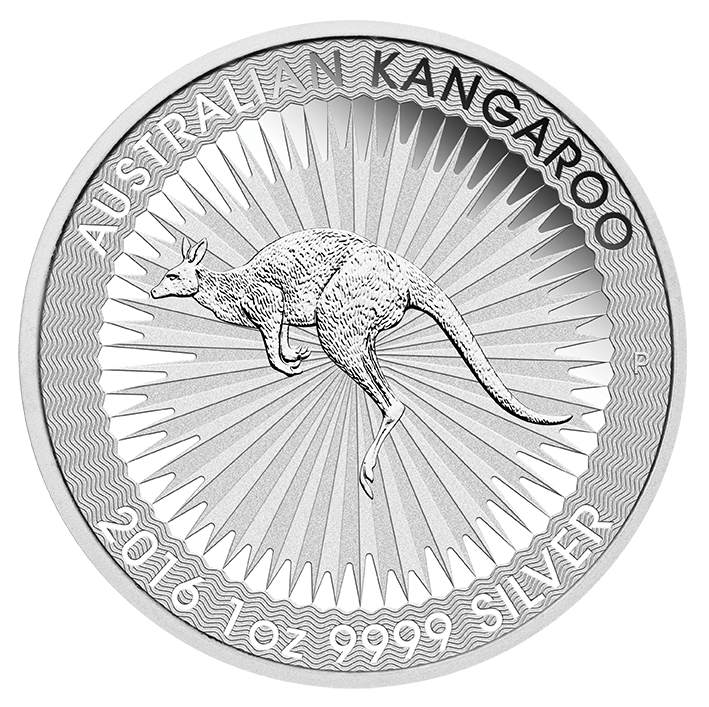
The Perth Mint’s sales of silver coins and especially Silver Kangaroos surged again in March and saw the second highest levels of silver coin demand on record as silver buyers in the western world continue to accumulate silver at what they believe to be depressed silver prices.

perth_mint-silver


Silver stackers continued to accumulate silver coins and bars and the new silver nugget or kangaroo coins (1 oz and 5 oz) saw very high levels of demand.

To keep up with very robust global demand, The Perth Mint has produced 7.5 million Australian Kangaroo 1oz silver bullion coins since it was released less than 8 months ago.

The first Australian bullion coin to be made from 99.99% pure silver, the iconic release comes with an innovative authentication feature in the form of a micro-laser engraved letter ‘A’. Representing exceptional value for money, the coin has attracted attention from investors around the world for whom the press is currently running flat-out according to the Perth Mint themselves.

Silver_Kangaroo
Bullion buyers continue to accumulate and see silver at below $16 per ounce as great value vis a vis gold ($1,225 per ounce), stocks and many other investments.

GoldCore can attest to that fact as we are seeing record demand for silver coins (now VAT free) in Ireland, the UK and EU.


silver_britannias
VAT and CGT Free Silver Britannias (1 oz)

See more here - Silver Coins VAT Free In The UK

Wednesday, April 6, 2016

‘$5 Million Coin’ Now On Sale – One of Largest, Purest and Rarest Gold Coins In World

Published here: http://www.zerohedge.com/news/2016-04-06/%E2%80%985-million-coin%E2%80%99-now-sale-%E2%80%93-one-largest-purest-and-rarest-gold-coins-world

‘$5 Million Coin’ Now On Sale – One of Largest, Purest and Rarest Gold Coins In World

One of the largest, the purest and rarest gold coins in the world – the first ‘million dollar coin’ which at today’s market prices is valued at $5.36 million (USD), €4.85 million (EUR) and £3.8 million (GBP) has come on the market and is now on sale.

Million_Dollar_Coin_Mounties

Mounties Guarding The "$5 Million Dollar Coin" In The Royal Canadian Mint


There are only five of these majestic bullion coins, weighing 100 kilos or 3,215 troy ounces each in existence today. They were first minted by The Royal Canadian Mint in 2007.

One of these beautiful, ‘collector item’ and 99.999% pure gold coins has become available for sale and GoldCore have secured exclusive rights in the UK and Ireland for the sale of the rare coin.

The coins were minted by the world renowned Royal Canadian Mint, which operates world-class refineries, as well as minting Canadian bullion coin products including the popular Canadian Maple Leaf gold and silver bullion coins (0.9999 pure or 24 karat).

Coin Specifications

  • Face Value: $1,000,000
  • Composition: 99999 fine gold
  • Weight (troy oz): 3,215
  • Weight (kg): 100
  • Coins in Existence Worldwide: 5
  • Coins Currently for Sale Worldwide: 1

Her Majesty Queen Elizabeth II portrait on the obverse side is a work by celebrated Canadian portrait artist Susanna Blunt. The reverse features an elegant hand-polished maple leaf design by Royal Canadian Mint artist and engraver Stan Witten.

The 100 kg, 99.999% pure gold bullion coin with a $1 million legal tender face value was originally conceived as a unique showpiece. This incredible coin combines craftsmanship and artistry with the unprecedented technical achievement of 99.999% purity in gold bullion.

  • Incredibly Rare Gold Coin
  • Purest Gold in the World
  • One of Largest Gold Coins in the World
  • Own a Piece of History

There were only five made – all of which are in private hands. It is a collector’s item and commands a premium both for its gold bullion content but also for being incredibly rare.

Million_Dollar_Queen_Elizabeth

A piece of history – the Royal Canadian Mint’s unique, pristine and beautiful ‘100 Kilo’ gold coin – one of the largest, the purest and rarest gold coins in the world.

For more information, call GoldCore on 203 086 9200 (UK) or 302 635 1160 (U.S.)

www.GoldCore.com


Tuesday, April 5, 2016

Silver Prices: Silver Price Jumps Amid Global Stock Selloff

Published here: http://www.profitconfidential.com/silver/silver-prices-silver-price-jumps-amid-global-stock-selloff/

Silver Prices Snaps Two-Day Decline
The silver price appreciated more than one percent on Tuesday, snapping a two-day decline, as risk-averse traders hurried to buy safety-haven investments and sell risky assets like stocks amid a global stock-market selloff.

The May silver price rose to as high as $15.22 a troy ounce before trimming gains to settle at $15.12 a troy ounce, or up 1.2%.

The silver price had lost 3.4% over the past two sessions following a robust U.S. jobs report last week.

The silver price is nearly 11% higher than its.

The post Silver Prices: Silver Price Jumps Amid Global Stock Selloff appeared first on Profit Confidential.

China’s Gold Intent – ICBC Bank Reclassified as an LBMA Market Maker

Published here: http://www.zerohedge.com/news/2016-04-05/china%E2%80%99s-gold-intent-%E2%80%93-icbc-bank-reclassified-lbma-market-maker

China’s Gold Intent – ICBC Bank Reclassified as an LBMA Market Maker

ICBC Standard Bank, China and the world's largest bank, has been reclassified as a spot Market Making Member of the London Bullion Market Association (LBMA) with effect from today according to a note posted on the LBMA website last night at 2100 GMT.


According to the post:

"In order to qualify as a LBMA Market Maker, a company must offer two-way quotations in both gold and silver to the other Market Makers throughout the London business day. Reclassification is the responsibility of the LBMA Management Committee. In deciding on the issue of reclassification, the Committee takes account of the views of the other Market Makers on the performance of the candidate company during an approximately three month probationary period.

Total LBMA membership stands at 146, consisting of 13 Market Making Members, 67 Ordinary Members and 66 Associates Members. The membership list can be found on the LBMA’s website."

ICBC becoming a new LBMA market maker in the gold market, while expected, is an important development and again shows China's intent with regard to becoming a key player in the global gold market. We are surprised by the lack of coverage of this important event but this could be due to the fact that the note was published at 9pm London time.


Gold Prices (LBMA)
5 April: USD 1,231.50, EUR 1,083.59 and GBP 866.32 per ounce
4 April: USD 1,215.00, EUR 1,068.80 and GBP 854.58 per ounce
1 April: USD 1,232.10, EUR 1,080.69 and GBP 860.20 per ounce
31 Mar: USD 1,233.60, EUR 1,085.50 and GBP 857.62 per ounce
30 Mar: USD 1,238.20, EUR 1,094.12 and GBP 860.23 per ounce

Silver Prices (LBMA)
5 April: USD 15.19, EUR 13.37 and GBP 10.69 per ounce
4 April: USD 14.96, EUR 13.17 and GBP 10.52 per ounce
1 April: USD 15.58, EUR 13.92 and GBP 10.99 per ounce
31 Mar: USD 15.38, EUR 13.52 and GBP 10.68 per ounce
30 Mar: USD 15.38, EUR 13.58 and GBP 10.68 per ounce

Gold News and Commentary
- Gold snaps 2-day losing streak as Asian shares slide (Reuters)
- Gold Rebounds From Two-Day Drop as Stocks Decline, Crude Slides (Bloomberg)
- Gold rebounds in Asia amid risk-aversion, $1230 eyed (FX Street)
- Hedge funds aren’t wavering on gold price rally (Mining.com)
- China State Paper Sees `Powerful Force’ Behind Panama Leak (Bloomberg)

- Clashing Views on Gold (Barrons)
- Cash Is Still King in Switzerland (Bloomberg)
- Rise Of The Silver Price Will Be Quick And Sudden (Silver Seek)
- Industry Experts Agree: Gold Prices Are Headed Higher (Stansberry Resource)
- Rickards: 2018 – SDR World Currency Backed with Gold (Daily Coin on Youtube)

Read More Here

7RealRisksBanner

‘7 Real Risks To Your Gold Ownership’ – Must Read Gold Guide Here

Please share our website with friends, family and colleagues who you think may benefit from it.

Thank you

www.GoldCore.com  

2018 – SDR World Currency Backed with Gold

Published here: http://www.zerohedge.com/news/2016-04-04/2018-%E2%80%93-sdr-world-currency-backed-gold


Jim Rickards: 2018 – SDR World Currency Backed with Gold 

Posted with permission and written by Rory Hall, The Daily Coin (CLICK FOR ORIGINAL)


Gold – everlasting, beautiful, money.

This video, from the Financial Times is a perfect example of the miseducation, the conditioning, I’ll even say to go so far as brainwashing about gold that has taken place. A lot of things people think they know about gold are completely wrong. The important things you should know about gold are very much unknown to most people. ~Jim Rickards

For the past 100 plus years the Federal Reserve has conducted a campaign against the virtues of gold. First, in 1933 using the Office of the President, they stole our gold through Executive Order 6102.

After this rather unsuccessful effort the real campaign began. Sometime after World War II the word “gold” was, basically, eliminated from everyday language and conversation. Yes, people in the Western world, still discuss gold when the subject of jewelry is brought up, but people don’t really understand gold and why or how it functions as money. Make no mistake about it, gold is money even today. If gold is not money then explain to me why central banks, around the world, including the United States central bank, the privately owned, Federal Reserve stores physical gold and accounts for it, as an asset, on their accounting ledger? The cost of storing gold is no small expense, especially if you are talking about a storage facility like Fort Knox. To be 100% clear, gold is money, period.

Why is gold money? There are plenty of good reasons why gold is money. One of them is: what else could be money? You’re not going to want something that’s radioactive; you’re not going to want something that dissolves in water; you’re not going to want something that’s impossibly scarce, you want it to be scarce but not too scarce. You don’t want a gas that’ll go up in the sky. ~Jim Rickards

China has been promoting the ownership of Silver and Gold to it’s Citizens since September 2009. Silver is money and has been used as money longer gold. Why would China encourage their citizens to acquire physical silver and gold? What do the Chinese know that the U.S. does not? Well, both are money and the Chinese government understands the U.S. dollar will not be used outside the United States very much longer. Therefore, the citizens of China are being taught, by their government, to protect their wealth from a currency crisis. What has the United States government taught it’s citizens about wealth, savings or a currency crisis? Anyone? Anything?

We’re Being Herded Into Digital Pens to be Slaughtered with Negative Interest Rates ~Jim Rickards'

Let’s listen to former President, George W. Bush, teach the people of the United States how to handle money and the economy –


Yes, that’s right, the President is teaching us about the economy and how we should “go shopping more”. Spend, spend, spend. What ever happened to save, save, save? Anyone remember “a penny saved is a penny earned“? We never hear any wisdom about the economy, money or the virtues of saving. You do remember what a virtue is, right?

When I sat down to discuss the economy, gold and global events with Jim Rickards, Agora Financial, we peered behind the curtain to see what China and Russia are doing, individually and collectively.

There is a subject that is so far off the radar by the mainstream media, independent media and, basically any media in the West that Mr. Rickards was somewhat surprised when I ask him about it. The Shanghai Cooperation Organization (SCO) is one of the most important developments in the last fifty years. This plan, which encompasses over 50% of the global population and over 70% of the natural resources on this planet, has been completely overlooked, with few exceptions, for many years.

China and Russia sit at the head of this gigantic organization and the implications for the West are many and far reaching. The monetary infrastructure, that is already in place, has the capacity to make void all Western world banking, financial and economic activity. The strategic alliance the SCO represents has the exact same implications regarding geopolitical situations and war. Look at how Russia developed a plan, executed that plan and was able to cripple “ISIS” in five months. The United States and it’s allies have been unable to accomplish this goal in fifteen years! That’s a force to be reckoned with. What makes you think the monetary infrastructure that China and Russia have in place can’t accomplish the same goal on the “monetary battle ground”? While we continue ignoring the most significant monetary and strategic developments, in our lifetime, we are only fooling ourselves that tomorrow will function the same as today. Tomorrow is already here, we just haven’t awakened to hear the news.


Let’s listen in and allow Mr. Rickards to give the details on gold, the SCO and what this means to all of us in the coming years.


Please email with any questions about this article or precious metals HERE


Jim Rickards: 2018 – SDR World Currency Backed with Gold 

Posted with permission and written by Rory Hall, The Daily Coin (CLICK FOR ORIGINAL)


Rory Hall, Editor-in-Chief of The Daily Coin, has written over 700 articles and produced more than 200 videos about the precious metals market, economic and monetary policies as well as geopolitical events since 1987. His articles have been published by Zerohedge, SHTFPlan, Sprott Money, GoldSilver and Silver Doctors, SGTReport, just to name a few. Rory has contributed daily to SGTReport since 2012. He has interviewed experts such as Dr. Paul Craig Roberts, Dr. Marc Faber, Eric Sprott, Gerald Celente and Peter Schiff, to name but a few. Visit The Daily Coin website and The Daily Coin YouTube channels to enjoy original and some of the best economic, precious metals, geopolitical and preparedness news from around the world.


Monday, April 4, 2016

Silver Is Coiled Spring and Will “Explode Higher”

Published here: http://www.zerohedge.com/news/2016-04-04/silver-coiled-spring-and-will-%E2%80%9Cexplode-higher%E2%80%9D

Silver Is Coiled Spring and Will “Explode Higher”

Silver bullion's reluctant, sluggish participation in early 2016’s powerful gold rally has been glaringly obvious. Instead of amplifying the yellow metal’s big gains as in the past, silver largely failed to even keep pace. The lack of silver confirmation for gold’s big move has certainly raised concerns. But despite silver’s vexing torpidity in recent months, it is a coiled spring ready to explode higher to catch and surpass gold.

silver_bullion_April2016
Gold (Red), Silver (Blue) ZealLLC

The bottom line is silver is a coiled spring today ready to explode higher. Silver was battered so low in recent years’ gold bear that it’s spent 2016 trading near stock-panic levels relative to gold. Such super-low prices aren’t sustainable, so silver is due for a massive mean reversion higher as investors start to return. Their lagging buying finally began in March, and will soon accelerate and become self-feeding.

Read article here


Gold Prices (LBMA)
4 April: USD 1,215.00, EUR 1,068.80 and GBP 854.58 per ounce
1 April: USD 1,232.10, EUR 1,080.69 and GBP 860.20 per ounce
31 Mar: USD 1,233.60, EUR 1,085.50 and GBP 857.62 per ounce
30 Mar: USD 1,238.20, EUR 1,094.12 and GBP 860.23 per ounce
29 Mar: USD 1,216.45, EUR 1,087.71 and GBP 853.04 per ounce

Silver Prices (LBMA)
4 April: USD 14.96, EUR 13.17 and GBP 10.52 per ounce
1 April: USD 15.58, EUR 13.92 and GBP 10.99 per ounce
31 Mar: USD 15.38, EUR 13.52 and GBP 10.68 per ounce
30 Mar: USD 15.38, EUR 13.58 and GBP 10.68 per ounce
29 Mar: USD 15.06, EUR 13.44 and GBP 10.56 per ounce

Gold News and Commentary
- Gold Rush by Russia Makes Up for Billions Lost in Currency Rout (Bloomberg)
- Gold nurses losses after robust U.S. jobs report (Reuters)
- Stars Align for Gold as Holdings Increase, Dollar Weaken (Bloomberg)
- Irish shadow banking system over 10 times size of the economy (RTE)
- Gold Scores Best Quarter in Nearly 30 Years; 2016 Silver Eagles Hit 14.8M (Coin News)

- Why The ‘Million Dollar Coin’? “Because We Can” (King5)
- Central bankers suppressing gold markets? (CNBC)
- Gold suppression have failed thruout history – Rickards (Seeking Alpha)
- Open Letter to the Next President (Gold Seek)
- Gold Lovers Bet Party Isn’t Over After Big First-Quarter Gain (Bloomberg)

Read More Here


Silver Coins - Delivered VAT Free in Ireland, UK and EU
You can now buy silver coins, VAT free, throughout the EU. You can take delivery of silver bullion, legal tender coins anywhere in the UK and the EU and not pay VAT or sales tax.

silver_kangaroo
2016 Silver Nuggets or Kangaroos (1 oz)

Silver bullion coins – like Silver Nuggets (Kangaroos), Eagles, Maples, Philharmonics and Britannias are great forms of insurance against currency debasement and financial collapse. They also make very nice gifts for loved ones and are a great way to pass on wealth to the next generation.

Silver coins and bars can also be owned tax free with GoldCore in vaults in Zurich, Singapore and Hong Kong. We have very competitive prices – some of the most competitive in the industry. We do not report client buy or sell transactions. Secure your allocation of silver bullion coins by contacting us today.

www.GoldCore.com 

Sunday, April 3, 2016

Silver Price: New Data Points Suggest Silver Prices Could Explode

Published here: http://www.profitconfidential.com/silver/silver-price-new-data-points-suggest-silver-prices-could-explode/

It’s probably time to stock up on silver, one of the best performing investments so far this year.

Concerns about global economic slowness have prompted risk-averse investors to seek safe haven in the devil metal and its peers, staying away from the highly volatile stock market.

Recent data compiled by Bloomberg shows that holdings in silver-backed exchange-traded products (ETPs) jumped 845.6 metric tons in March, heading for the biggest monthly increase since August 2013. (Source: “.

The post Silver Price: New Data Points Suggest Silver Prices Could Explode appeared first on Profit Confidential.

Hello Helicopter Money! Government-Owned Bank Begs Customers To Borrow Cash

Published here: http://www.zerohedge.com/news/2016-04-03/hello-helicopter-money-government-owned-bank-begs-customers-borrow-cash

Helicopter Money Belfius

Source: hln.be

We have already reported back to you several times on how desperate the European Central Bank seems to be in its attempts to get the money circulation in the Eurozone going again. Unfortunately all of its previous ‘ideas’ didn’t really work out too well, and the ECB just continues to cut its most important interest rates to discourage the banks to deposit cash at the ECB in overnight deposits.

Nice theories don’t always work in the real world, and the idea of negative interest rates definitely didn’t help at all. But then, the ECB’s recent statements contained some interesting surprises. During the Q&A session with journalists, Mario Draghi confirmed ‘ helicopter money ’ is a real thing, and just one week later, one of the main board members of the ECB was quoted in an Italian newspaper saying helicopter money is interesting (and cannot be ruled out).

That would be quite unique, and we were very intrigued when we got our hands on a letter from a Belgian bank to an existing (business) client. In that letter, the bank offered the client an immediate credit facility of 3,750 EUR (which could immediately be expanded to 10,000 EUR upon request).

You might think that’s business as usual, but that’s not the case in Belgium.

The most intriguing part is that this bank is 100% government-owned, and that the client has never applied for a loan, nor does he need one. In fact, the company is perfectly healthy, has no net debt but a net cash position on the balance sheet, but still was offered to borrow money without any installment fees whatsoever. The business owner also confirmed to us he has been client at a larger non-government bank for a much longer period of time but has never ever even received just a request to find out what his capital needs are.

Helicopter Money Belfius

Source: letter provided to us, in Dutch.

Was this a publicity stunt? No. Included in the letter was a SIGNED CONTRACT by the bank’s credit department, stating the credit facility HAS ALREADY BEEN OPENED (the highlighted part in yellow states ‘this proposal will automatically turn into a contract from April 15 on') and no further action was required. In fact, there was an accompanying letter promoting another credit facility of up to 22.5M EUR (keep in mind the business we’re talking about has a total annual revenue of less than half a million US Dollar) which could be made available upon a second check and after paying a 2,500 EUR installment fee. That’s right, a bank was proposing a substantial line of credit with an installment fee of 0.01% of the total amount that would be borrowed.

We don’t like to use the term ‘ helicopter money ’ loosely but in this case it certainly looks like this (again; government-owned) bank has gone in overdrive to force credit lines down people’s and company’s throats. Giving away credit lines with no end date looks pretty much like a ‘please borrow some money from us’ type of thing. And we have saved the best for last. Belfius Bank is nothing less but the nationalized part of Dexia, the bank that collapsed during the Global Financial Crisis and was nationalized in 2011 after more shit has hit the fan, and the cost to insure against a default of this bank more than hundredfolded, as you can see on the next image.

Helicopter Money Dexia

Source: zerohedge.com

Will this help the money circulation in the Eurozone? Let’s have a look at the evolution of the M1 Money Supply rate. The M1 supply rate is the ‘purest’ way to find out how much money there is in circulation, and when you pull up the chart, you’ll indeed notice there has been a tremendous increase in the money supply in the Eurozone.

Helicopter Money M1 Suppl

Source: tradingeconomics.com

And that’s not it. Despite the sharp increase to 6,700 B EUR (up 21% in just two years), the consensus estimates for the further development of the M1 Money Supply Rate are calling for an additional 13% increase within the next 12 months and a 62% increase by the end of this decade.

Helicopter money no longer is a vague theoretical concept, and it’s becoming more realistic by the day.

>> Start protecting yourself, read our 'Guide to Gold' for free!

Secular Investor offers a fresh look at investing. We analyze long lasting cycles, coupled with a collection of strategic investments and concrete tips for different types of assets. The methods and strategies are transformed into the Gold & Silver Report and the Commodity Report.

Follow us on Facebook @SecularInvestor [NEW] and Twitter @SecularInvest


Saturday, April 2, 2016

Gold Prices Rise 16% In Q1 – Best Quarter In 30 Years

Published here: http://www.zerohedge.com/news/2016-04-02/gold-prices-rise-16-q1-%E2%80%93-best-quarter-30-years

Gold Prices Rise 16% In Q1 – Best Quarter In 30 Years

– Gold prices gained 16% in Q1 – best quarterly performance since 1986
– Gains due to increasing global financial, macroeconomic and monetary risk
– Stocks come under pressure – Flat in U.S.; Falls in Europe and Asia
– Sterling fell 20% on BREXIT concerns and the euro fell 11% against gold
– Canadian dollar fell 10%, Aussie dollar fell 9% & Swiss franc fell 12% against gold
– Outlook positive as gold and silver remain undervalued
– Reasserted role as safe haven in Q1 


gold_Q1_Performance
Year To Date Relative Performance (Finviz)


Gold prices gained 16% in the first quarter and had their best quarterly performance since 1986. Gold made gains due to continuing ultra loose monetary policies, diminished U.S. rate-increase expectations, worries about global economic growth, both U.S. and global geopolitical concerns and turmoil in markets.

Most of the gains came in the first six weeks of the year when market turmoil was at its worst and sharp falls were seen in stock markets. For the quarter, the S&P recovered from losses and eked out a 0.9% gain, the DJIA was 1.7 percent higher while the Nasdaq 100 fell 2.7% on concerns of a new tech bubble.

gold_Q1_2016Bloomberg


European stocks had a torrid quarter with the EuroStoxx 50 shedding 10.3 percent and the DAX down 9%.  The Nikkei crashed 13.2% in the quarter as the Japanese economy showed little signs of recovery and indeed looks on the verge of a depression.

The dollar logged its worst quarterly performance since 1990 as the Federal Reserve slowed the expected pace of interest rate hikes, citing worries about the potential domestic impact of very weak global growth.

Sterling was the weakest major currency in the world and the British pound weakened 2.5% against the dollar and 20% against gold over the course of the quarter as worries about a possible U.K. exit from the European Union led to traders selling sterling aggressively.

All currencies fell in gold terms even ones that were stronger than the dollar. The yen was the strongest major currency in the world despite the struggling Japanese economy. While it rose 7.1% against the dollar, it was 9% lower versus gold.

Sterling fell 20% and the euro fell 11% against gold. The Canadian dollar fell 10%, the Aussie dollar fell 9% and the Swiss franc fell 12% against gold.

Gold started the year at $1,062, €974 and £716 per ounce and finished the quarter at $1,233, €1,080.69 and £860.20 per ounce.

Geopolitical risk intensified with the risk of terrorism and war ever present and gold continued to act as an important hedge against geopolitical risk and indeed currency devaluations.

Further correction and consolidation remains a possibility given the strong gains in the quarter. However, we expect currencies to continue to fall in value versus gold in 2016 and competitive currency devaluations and currency wars are set to return.

Even after recent gains, gold remains 35% below the nominal high in August 2011 and silver some 70% below its nominal high in April 2011. In inflation adjusted or real terms, prices remain even more undervalued.  This is especially the case given the negative interest rate monetary backdrop and other significant economic and geopolitical risks.

Gold reasserted its role as a hedging instrument and an important safe haven assetin the quarter. Exactly, when investors needed gold to perform, as stocks and currencies lost value in the quarter, gold outperformed. Once again, it enhanced returns and reduced volatility for those with diversified portfolios.


Gold Prices (LBMA)
01 April: USD 1,232.10, EUR 1,080.69 and GBP 860.20 per ounce
31 Mar: USD 1,233.60, EUR 1,085.50 and GBP 857.62 per ounce
30 Mar: USD 1,238.20, EUR 1,094.12 and GBP 860.23 per ounce
29 Mar: USD 1,216.45, EUR 1,087.71 and GBP 853.04 per ounce
24 Mar: USD 1,216.45, EUR 1,088.75 and GBP 861.89 per ounce

Silver Prices (LBMA)
01 April: USD 15.38, EUR 13.48 and GBP 10.76 per ounce
31 Mar: USD 15.38, EUR 13.52 and GBP 10.68 per ounce
30 Mar: USD 15.38, EUR 13.58 and GBP 10.68 per ounce
29 Mar: USD 15.06, EUR 13.44 and GBP 10.56 per ounce
24 Mar: USD 15.28, EUR 13.70 and GBP 10.82 per ounce

More Here 


Friday, April 1, 2016

Rebutting Matt O'Brien's and the Washington Post's Misguided Attack on Gold

Published here: http://www.zerohedge.com/news/2016-04-01/rebutting-matt-obriens-and-washington-posts-misguided-attack-gold

It is our mission to rebut any mainstream article that spreads misinformation about gold and/or shows a gross misunderstanding of monetary history. In Matt O’Brien’s “Wonkblog” in the Washington Post on February 23, 2016, titled “This might be Ted Cruz’s worst idea“, he does both. The ‘worst idea’ in this case refers to the Texas Senator’s view that it would be to the benefit of the US economy to return to a gold standard. One of O’Brien’s main arguments against the gold standard, aside from his claim that apparently nobody on the “University of Chicago's ideologically diverse expert panel” thinks it a good idea, is that he believes goods and services priced in gold are more volatile than goods priced in US dollars and, behold, sometimes prices can even decline substantially. 


Source: Washington Post

 Obviously what O’Brien completely omits is that under a gold standard, the dollar and gold are one and the same. With the same argument, O’Brien could have shown that prices for US goods and services have been even more volatile when measured in euros, Canadian dollars or Japanese yen, and then conclude that euros, Canadian dollars and yen are much too volatile to be used as money (see Figure 1). Needless to say, more than 500 million people use those currencies every day. If gold would have been the official currency of the United States since 1988, the price chart would have looked just as smooth, with the difference that it would not be pointing up but it would be simply a flat horizontal line, pretty much the way it was before 1971. This is a simple point not hard to understand. Anyone who has spent a little bit of time studying currencies, gold and economic principles in general understands it. 

US goods measured in foreign currency are much more volatile than in USD (or gold for that matter). It doesn’t mean much, which is why normally nobody would bother showing such a chart.


Source: Bloomberg, GoldMoney

Let us ignore all that for a moment and assume that for the past 30 years prices for US goods and services under a gold standard would have indeed moved the way in which they did when measured in gold. This reveals another flaw in O’Brien’s tirade against gold. He claims that:

“After all, it's not like the price of gold matters to a middle-class family. It has nothing to do with the price of food or housing or education or anything else that anyone who isn't preparing for the end of the world would need.”

That is simply just plain wrong. O’Brien tries to prove his point of view in his chart shown above that supposedly represents how prices changed since 1988 (a completely arbitrary starting point) and how they would have changed under a gold standard. As source he quotes the St. Louis Fed’s FRED database, but it doesn’t say what the data actually show. One can only assume the creator of the chart used the CPI deflator and overlaid it with the gold price. The problem is, that doesn’t really reflect – to use Matt O’Brien’s own words – “what matters to a middle class family.” This is because the CPI (and not gold) seems to have actually quite little if not exactly “nothing to do with the price of food, or housing or education or anything else to anyone”. So let’s look at how prices for goods and services that are of particular relevance for the middle class would have changed in gold. And we shall use O’Brien’s arbitrary starting point of 1988 (and not the end of the gold standard in 1971 which would have made sense or simply the end of the 20th century or anything else more intuitive than 1988. 1988 could most likely be the mathematically best starting point to support his flawed argument).

Let’s start with energy. O’Brien doesn’t specifically mention energy even though it certainly matters for a middle class family. According to the US Energy Information Agency (EIA), 3.2 billion barrels of gasoline were consumed each year in the United States on average during the past five years. At an average price of USD3.30/gal, this equates to roughly USD1,400 per person (including every child and retiree). But that is only half the bill, as total US crude oil consumption is roughly seven billion barrels per year. This doesn’t mean that an average household of four outright spends USD10,000 on fuel, because a lot of fuel is consumed by company cars, trucks and other commercial vehicles and machines. But in the end, those commercial costs drive the costs of products and services consumed as well. Add bus tickets and airfares and the houses in the northeast that rely on heating oil in the winter and you understand that crude oil costs account for a large share of consumer expenditures, both directly and indirectly. Overall, the US has spent roughly 6% of its GDP on crude oil over the past five years. It clearly matters for the average middle-class family. The chart below shows retail gasoline prices including taxes. As one can see, gasoline prices tend to be somewhat less volatile when priced in gold. This becomes even more evident if the time horizon is extended back to the end of the gold standard in 1971. (For those who are interested in finding out why, you can read our gold price framework report here.)

 Prices for petroleum products are less volatile when measured in gold

Source: Bloomberg, Energy Information Administration, GoldMoney

But maybe oil is the outlier, and O’Brien is right when it comes to other important consumption goods? Well let’s look at food then, because every middle class family needs food. The Economist magazine publishes the price of a BigMac Burger for different countries in their BigMac index. The idea is to compare the purchasing power of different countries’ currencies. But this also a great tool to compare how food prices have changed over time. After all the Big Mac is a staple, served the same anywhere in the US, a commodity that really didn’t change much since 1988, which makes it perfect for our comparison. This chart looks a bit different. Prices do rise a bit when measured in gold between 1995-2000, but are nowhere near as volatile as O’Brien’s chart suggests. Then prices come down and eventually they end up slightly below where they started in 1988.

This is nothing but a continuation of a trend that has been present in human history for hundreds of years. It shows that society is able to push the boundaries of scarcity with technological progress. Think of how many calories per day the average American was able to purchase in 1800, in 1900, and how that has improved until 1950. It is a good thing that the average American no longer has to spend half of his daily income for food as it was in the past. Does it make sense to be afraid that expectations of declining food prices will lead to lower aggregate demand because people will push the purchase of food to a future date? Of course not. Is it a problem when the average American has to spend a larger share of his disposable income for food? It certainly is. The price of a BigMac has increased by 101% in dollar terms since 1988. In comparison, the median household income has only increased by 97%. It might not look like much, but this runs completely contrary to the upward trend in prosperity consumers enjoyed over the previous 200 years, during most of which the US dollar was pegged to gold (or silver).

Even as the price for a BigMac has risen faster than median household income, the price for a BigMac measured in gold is now slightly below the price in 1988 

Source: The Economist BigMac Index, Bloomberg, GoldMoney

Falling prices (ie deflation) are the boogeyman of today’s mainstream economic doctrines. The conventional wisdom is that it was deflation that pushed the US economy from a normal recession into the great depression in the early 1930s. If consumers expect the price for a good to be lower in the future, so the argument goes, they will delay the purchase, which in turn will lower aggregate demand, deepen the recession and possibly turn in into a prolonged depression. Hence, price deflation has to be avoided at all costs. While this might make some sense, consumers don’t always behave the way economist believe they should. Take the iPhone for example. One can be sure that a year from now there is a new model, and the current model will sell for half the price. Yet people can’t seem to get enough of the newest one. Indeed, falling prices for computers and most electronic goods have been the norm for years and yet sales continue to rise.

Fact is, falling prices are for most people a good thing. After decades of stagnating real wage growth, lower prices are welcomed by the majority of US consumers. And despite the claims of mainstream economists that there is strong link between deflation and depression, historical data seems to prove otherwise. In a 2004 research report for the National Bureau of Economics, UCLA’s Andrew Atkeson and Patrick Kehoe from the Research Department of the Federal Reserve Bank of Minneapolis analyzed economic data over a period of more than 100 years for 17 countries and found that “the only episode in which we find evidence of a link between deflation and depression is the Great Depression (1929—34). But in the rest of the data for 17 countries and more than 100 years, there is virtually no evidence of such a link.” It seems deflation doesn’t automatically lead to a recession or even a depression, and even in regards to the great depression, Austrian School economists would argue that Keynesian economists confuse cause and effect, that deflation was primarily the result of the recession, rather than the other way round.

O’Brien also brings up housing as an important part of the costs for a middle class family and we are happy to cover that as well. Housing differs from a consumer good in the sense that you don’t buy a house every day. You start saving for a house and save over a very long time period until you have saved enough to make the purchase, or at least the down payment. Hence volatility in prices month-to-month are less of a concern. What really matters is how long you have to save to buy the house (or pay it off if you finance it). Inflation is a real problem however. If you put USD1,000 aside and 20 years later the purchasing power of that USD1,000 is cut in half, it will become a Sisyphean task to save enough money to buy a house.

Imagine a young worker who had just entered the workforce in 1988. His dream is to buy a house one day. For that he puts USD250 aside at the end of every month. He thinks he can get a mortgage and the bank will lend him 50% of the value of the house when the time comes. He has now two choices: he can save in US dollars, or he can save in gold. The below chart shows how long he has to save to achieve his goal. If the had decided to make his savings in gold in 1988, it would have taken him a bit under 20 years to accumulate enough wealth. But had he decided to save in US dollars, house prices would have risen too fast for him to ever reach his goal. By 2007 (the time he was able to buy the house was he smart enough to save in gold), property prices had risen 102% in US dollar terms according to data from the US census bureau. That means the first USD250 he saved in 1988 had lost 50% of its purchasing power. In contrast, the average house in 1988 cost about 10kg of gold and by the time our house buyer was able to afford the house in 2007, it had risen to only 10.6kg. Hence the first gram he put aside in 1988 still bought him roughly the same amount of house.

Now these calculation above ignore bank interest and you will argue that he would have been stupid to save his dollars by storing them under his mattress. Surely the interest earned from his money would have been enough to offset the loss in purchasing power? Think again. We used the 12 month deposit rate and even though in theory there was a brief moment where he actually would have been able to purchase the house, it would have been a bold move right into the crashing housing market, and it was probably not that easy to get a mortgage at the time.

As house prices rise fast, saving for a home becomes a Sisyphean task. Saving in gold has proven to be much more efficient

Source: US Census Bureau, Bloomberg, GoldMoney

The Gold Standard as it existed prior to 1971 certainly had its flaws. But nothing of what Matt O’Brien wants to make us believe is one of them. The main flaw in the gold "standard" to which O'Brien and the ”ideologically diverse panel of economists” refer was that it was fractionalized via a central bank rather than being fully-reserved. People must remember that even though gold as base money is superior to fiat, the gold standard of the 1920's was still flawed as the gold was held as base money by the Central Bank and the Commercial Banks were able to extend or fractionalize that base money as commercially circulating money at a factor of 6-8 times. Therefore, instead of actually owning and using gold, citizens owned a fraction of a base of gold depending on the ebbs and flow, booms and busts in the economy and business cycle. As we know, a particularly large bust took place in 1929-1932 and the US banking system, being only fractionally reserved, became subject to a bank run and many banks thus failed.

Before the central bank model was introduced in the US in 1914, the commercial banks themselves were also generally only fractionally-reserved. That was a recipe for occasional financial instability, known at the time as “Panics”. That stands in sharp contrast to the gold standard we promote at GoldMoney Inc.: one that is fully reserved and decentralized as there is no central controlling entity extending or contracting credit against the gold. Rather, in our gold standard framework, decentralized actors such as ourselves would use their fully reserved gold to engage in commerce, trade, and productive activities. Extending credit would be left to other institutions inclined to take such risk and, of course, subject themselves to the risk of default or failure. But under this framework the failure of credit institutions would not threaten the broader financial system, the money itself—gold—or the economy more generally. There would be no such thing as “Too Big To Fail”, as it were.

Together with our sister company BitGold, we allow everybody to own physical gold stored under their own name and use it for transactions, down to 0.03cts. It’s our customers’ gold. It’s not a promise of future delivery, ownership in an obscure financial vehicle that owns gold or some sort of token that represents gold. It’s your gold, which nobody can encumber or debase.

The gold standard was an effective way to combine the proven superiority of gold as base money with the utility of paper currency for transactions (e.g. small denominations, ease of exchange, efficiency etc.). To transact in actual gold coin, especially for smaller transactions, was simply not practical at the time. But technology now enables us to overcome all of that and to use gold not only as a monetary reserve for circulating currency but as actual, transactional money. In 2016, gold is now as easy and efficient to use for transactions as the dollar or other major currencies are. In fact, it is actually more efficient: In what other currency can you transfer one dollar of value within seconds from any point on the planet to another with no costs occurring or no need to create or extend credit?

The technology now exists to save, transfer, remit, redeem and otherwise conduct one’s personal business and financial activities in gold. Hence, whether governments decide to go back to a formal gold standard or not someday, people already have the choice. So what do you say Mr O’Brien? Why not join our 800,000+ and rapidly growing gold client base, now spread over 100 countries? Something tells us that they are substantially more “ideologically diverse” than that panel of “experts” who are telling them that they are wrong.

The Great Divide: the Death of the Middle Class

Published here: http://www.zerohedge.com/news/2016-03-31/great-divide-death-middle-class


The Great Divide: The Death of the Middle Class

Written by Jeff Nielson (CLICK FOR ORIGINAL)


The Great Divide: the Death of the Middle Class - Jeff Nielson


Several months ago, a chart produced by one of the Big Banks was presented to readers . It was supposed to be innocuous data on global wealth distribution, but instead portrayed a horrifying picture.


The focal point of the aforementioned article was that when it came to “the world’s poorest people,” the Corrupt West has now produced a greater percentage of severe poverty in its own populations than in India, and an equal percentage of such poverty as exists in Africa.

Stacked beside this, we see that when it comes to the richest-of-the-rich, the Corrupt West remains in a league of its own. Supposedly, we are living in “the New Normal,” where life is supposed to get increasingly harder and harder. So why does the New Normal never affect those on top?

Of course all of these extremely poor people being manufactured by our governments (as these regimes give away our jobs, destroy wages, and eviscerate our social programs) have to come from somewhere. Certainly they don’t come from the Wealthy Class.

Indeed, the chart above provides us with a crystal-clear view of where all these poor and very-poor people are coming from: the near-extinct Middle Class. In order to manufacture hundreds of millions of impoverished citizens in our nations, the Old World Order has had to engage in a campaign to end the Middle Class.

We are conditioned to consider economic “classes” within our own societies, but with the chart above, we’re given a global perspective. Where does the Middle Class exist today, globally? At the upper end, it exists in China, and to a lesser extent, in Latin America and other Asian nations. At the lower end of the Middle Class, we see such populations growing in India and even Africa.

Only in the West, and especially North America, is the Middle Class clearly an endangered species. Two incredibly important aspects of this subject are necessary to cover:

1) How and why has the One Bank chosen to perpetrate Middle Class genocide?

2) What are the consequences of the Death of the Middle Class?

Attempting to catalogue the nearly infinite number of ways in which the oligarchs of the One Bank have perpetrated their Middle Class genocide is impractical. Instead, discussion will be limited to the five most important programs responsible for the Death of the Middle Class: three of them relatively new, and two of them old.

a) Globalization

b) Union decimation/wage destruction

c) Small business decimation

d) Money-printing/inflation

e) Income taxation

Globalization was rammed down our throats in the name of “free trade,” the Holy Grail of charlatan economists . But, as previously explained, real free trade is a world of “comparative advantage” where all nations play by a fair-and-equal set of rules. Without those conditions, “free trade” can never exist.

The globalization that has been imposed upon us is, instead, a world of “competitive devaluation,” a corrupt, perpetual, suicidal race to the bottom. The oligarchs understood this, given that they are the perpetrators. The charlatan economists were too blinded by their own dogma to understand this. And, as always, the puppet politicians simply do what they are told.

Next on the list: union decimation and wage destruction are inseparable subjects, virtually the flipside of the same coin. “But wait,” shout the right-wing ideologues, “unions are corrupt, everyone knows that.”

Really? Corrupt compared to whom? Are they “corrupt” standing next to the bankers, who have stolen all our wealth ? Are they “corrupt” standing next to their Masters, the oligarchs who are hoarding all our stolen wealth ? Are they “corrupt” standing next to our politicians, who betrayed their own people to facilitate this economic pillaging? No, compared to any of those groups, unions (back when they still existed) were relative choir-boys.

When it comes to corruption, nobody plays the game as well as those on top. Compared to the Fat Cats, everyone else are rank amateurs. When unions were strong and plentiful, everyone had jobs. Almost everyone earned a livable wage (or better). Gee, weren’t those terrible times! Look how much better off we are now, without all those “corrupt unions.”

The other major new component in the deliberate, systemic slaughter of the Middle Class was and continues to be Small Business decimation. “Small business is the principal job-creator in every economy.” Any politician who ever got elected can tell you that.

If this is so, why do our corrupt governments funnel endless trillions of dollars of Corporate Welfare (our money) into the coffers of Big Business, while complaining there is nothing left to support Small Business? Why do our governments stack the deck in all of our regulations and bureaucracies, greasing the wheels for Big Business and strangling Small Business in their red tape?

Why do our governments refuse to enforce our anti-trust laws? One of the primary reasons for not allowing the corporations of Big Business to grow to an illegal size is because these monopolies and oligopolies make “competition” (meaning Small Business) impossible. One might as well try to start a small business on the Moon.

Then we have the oligarchs’ “old tricks” for stealing from the masses (and fattening themselves): banking and taxation. Of course, to the oligarchs, “banking” means stealing, and you steal by printing money. As many readers are already aware, “inflation” is money-printing – the increase (or inflation) of the supply of money.

In the absence of the gold standard, there is no way to protect savings [i.e. wealth] from confiscation through inflation .

- Alan Greenspan (1966 version )

Remove the Golden Handcuffs , as central banker Paul Volcker bragged of doing in 1971, and then it’s just print-and-steal – until the whole fiat currency Ponzi scheme implodes.

Then of course we have income taxation: 100 years of systemic thievery. No matter what the form or structure, by its very nature every system of income taxation will:

i) Provide a free ride to those at the very, very top

ii) Be revenue-neutral to the remainder of the wealthy

iii) Relentlessly steal out of the pockets of everyone else (via over-taxation)

This is nothing more than a matter of applying simple arithmetic. However, many refuse to educate themselves on how they are being robbed in this manner, year after year, so no more will be said on the subject.

These were the primary prongs of the oligarchs’ campaign to exterminate the Middle Class. As always, skeptical readers will be asking “why?” The answer is most easily summarized via The Bankers’ Manifesto of 1892 . This document was presented to the U.S. Congress in 1907 by Republican congressman, and career prosecutor, Charles Lindbergh Sr.

It reads, in part:

The courts must be called to our aid, debts must be collected, bonds and mortgages foreclosed as rapidly as possible.

When through the process of law, the common people have lost their homes they will be more tractable and easily governed through the influence of the strong arm of government applied to a central power of imperial wealth under the control of the leading financiers [the oligarchs]. People without homes won’t quarrel with their leaders.

We have “the strong arm of government.” The oligarchs saw to that by bringing us their “War on Terror.” When it comes to throwing people out of their homes, and creating a population of serfs, that’s a two-part process.

Step 1 is to manufacture artificial housing bubbles across the Western world, and then crash those bubbles. However, this is only partially effective in turning Homeowners into Homeless. To truly succeed at this requires Step 2: exterminating the Middle Class. A Middle Class can survive a collapsing housing bubble, assuming they remained reasonably prudent. The Working Poor cannot.

Finally, after more than a century of scheming, the oligarchs have all of their pieces in place. In the U.S., they’ve even already built many gulags – to warehouse these former Middle Class homeowners – since a large percentage of those people are armed.

This brings us to one, final point: the consequences of the Death of the Middle Class. What happens when you destroy the foundation of a house? Just look.


As readers have been told on many previous occasions, the “velocity of money” is effectively the heartbeat of an economy. It is another way of representing the economics principle known as the Marginal Propensity to Consume, probably the most important principle of economics forgotten by charlatan economists.

The principle is a simple one, since it is half basic arithmetic and half common sense. Unfortunately, these are both skills beyond the grasp of charlatan economists. If you take all of the money out of the pockets of the People, and you stuff it all into the vaults of the Wealthy (where it sits in idle hoards), then there is no “capital” for our capitalist economies – and these economies starve to death .

What is the response of the oligarchs to the relentless hollowing-out of our economies? They have ordered the puppet politicians to impose Austerity: taking even more money out of the pockets of the people. It is the equivalent to someone with anorexia going to a doctor, and the doctor imposing a severe diet on the patient (i.e. victim). The patient will not survive.


The Middle Class is dying. Unlike the oligarchs’ Big Banks, we are not “too big to fail.” Our jobs are gone. Our unions are gone. Our Middle Class wages are gone. Very soon, our homes will be gone. But don’t worry! It’s just the New Normal.


Please email with any questions about this article or precious metals HERE


The Great Divide: The Death of the Middle Class

Written by Jeff Nielson (CLICK FOR ORIGINAL)