Thursday, October 26, 2017

Gold Will Be Safe Haven Again In Looming EU Crisis

Published here: http://www.zerohedge.com/news/2017-10-26/gold-will-be-safe-haven-again-looming-eu-crisis

Gold will be safe haven again in looming EU crisis

- EU crisis is no longer  just about debt but about political discontent
- EU officials refuse to acknowledge changing face of politics across the union
- Catalonia shows measures governments will use to maintain control
- EU currently holds control over banks accounts and ability to use cash
- Protect your savings with gold in the face of increased financial threat from EU

Editor: Mark O'Byrne

When we talk about the Eurozone crisis we are usually referring to the Eurozone debt crisis. According to the OECD the debt crisis of 2011 was the world's greatest threat.

In the years that followed, Germany, France and the UK led EU members in their efforts to stave off debt defaults from the likes of Ireland, Portugal, Italy, Spain and, of course, Greece. This was partly in order to protect the German, French and UK banks who had lent irresponsibly into the periphery EU nations and were very exposed.

In recent months one could argue that things were starting to look up for the single-currency area. Recent headlines report that the Eurozone's recovery is firmly under way. Manufacturing workloads are rising and companies are hiring at their fastest pace in over a decade.

Of course much of the recovery is attributed to the ECB and their bond purchasing 'stimulus' of €60 billion euros every single month ... courtesy of Super Mario's Bazooka. This is unlikely to come to a halt later today in what is being touted as the central bank's most important policy meeting recently.
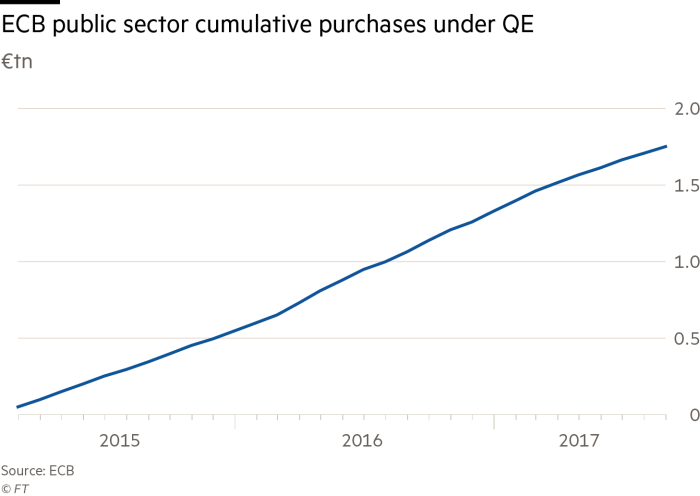
EU purchases

There are a few different potential outcomes to the meeting, but none will address the new and very real and very pressing Eurozone crisis: the growing political crisis.

Political change: the real Eurozone crisis

Ever since the debt crisis exposed the cracks in the 'single currency' union, the increasingly two-tier economy has caused more and more problems, both economic and political.

Germany has surged ahead in terms of productivity and GDP growth. Meanwhile the southern states have experienced economic pain.

Throw into the mix various EU requirements on countries such as free movement of labour and refugee quotas and it isn't just the poorer countries that are feeling the heavyweight of eurozone politicians.

This has inevitably given way to a populist surge in politics as voters become increasingly disenfranchised with the EU first, country second approach of their own elected governments and the unelected bureaucrats in Brussels.

This is now a real political risk and reality which the bureaucrats of the EU seem to treat like an embarrassing smell: something they hope will just disappear and require no acknowledgement.

In truth this will continue to snowball as the EU will inevitably remain economically and socially unbalanced. This is a eurozone crisis that is no longer about poor countries unable to cover their debts, this is a eurozone crisis that threatens the very nature of the European Union.

A populist surge has already arrived

Political risk has long been present in the Eurozone. Since the creation of the single-currency union and its various requirements of participating countries, there has arguably been an underlying nationalist movement protesting against the imbalance across the market, the bureaucrats and the control of Brussels.

Only in the last couple of years however, has this political issue gained an international and influential stage. Brexit was of course one of the catalysts that sparked the reaction (followed by Trump's election) prompting worries that a populist surge was about to sweep through Europe.

The concerns are not completely unfounded. We can now briefly look across Europe to the likes of Spain and the Czech Republic and see that this is exactly what has been (and is) going on.

The most current and serious of these political issues is in Catalonia. On October 1st, 90% of the 43% of voters who participated in the unofficial referendum voted for independence from Spain.

Has the EU appreciated the damage that could be done as a result of not only a legal (and successful) Catalonian referendum and the current fallout alone?

Holger Schmieding, chief economist at Berenberg in London said earlier this month "for the euro zone as a whole, the possible Catalan impact will probably be too small to make a noticeable difference." This is a common EU response.

But they seem to be forgetting that events in Catalan are not just seen as isolated to the region. The rest of world sees this as a reflection on Spain and therefore, the Eurozone.

The Eurozone has no easy answers to questions such as will the region be allowed to use the euro or what will happen to Spanish banks? The country is the Eurozone's fourth-largest. Given Spain’s national net debt is more than one trillion euros anything that rocks the stability of the country will have a ripple effect across the EU and beyond.

Czech Trump secures major victory at home and across EU

Last weekend saw a dominant win in the Czech Republic for the euroskeptic ANO party. It is the first time an outwardly anti-euro leader has been elected within the EU-region. The result was not surprising given the general consensus in the country. Parties opposed to deeper integration won more than half of the vote.
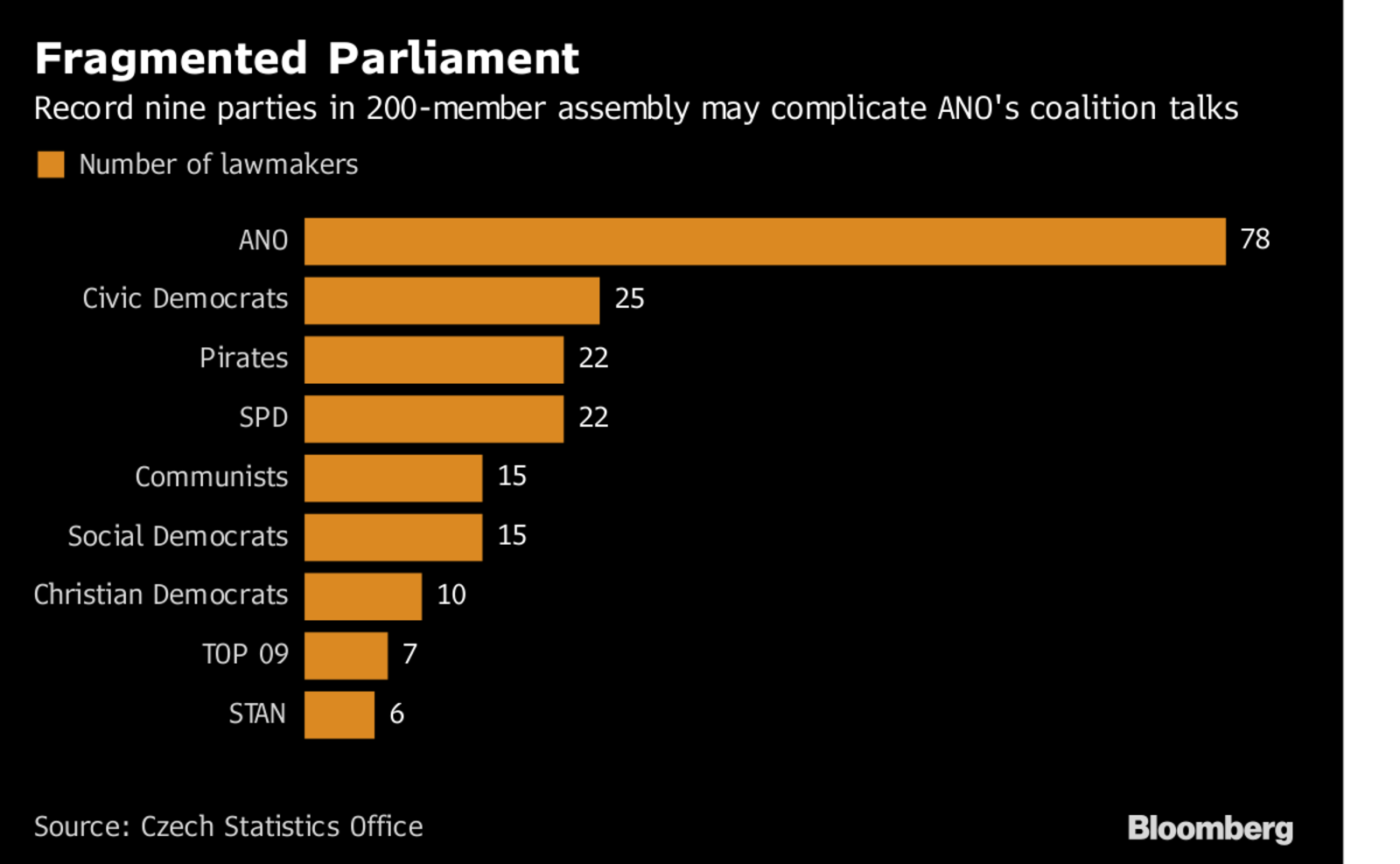
ANO leader and multi-billionaire, Sebastian Kurz, is likely to form a coalition with the far-right Freedom Party. Both oppose the euro and have blamed increased terrorism attacks on Germany's immigration policy. Meanwhile parties such as the anti-Muslim Freedom and Direct Democracy, the SPD, gained a significant number of votes.

Angela Merkel is likely looking at the Czech election with some apprehension. She was closely contested in her own recent election. Whilst she remains Chancellor, right-wing parties gained significant ground and she is yet to form a coalition.

As with the Catalan referendum or Brexit vote, this is not about increasing levels of racism or an 'anti-Europe' stance. Despite what the headlines say no-one has declared their country should leave the continent. Brits remain a part of Europe as do the Czechs, they just no longer wish to be under the rule of a government that operates outside of their own (perceived) interests. The benefits of which are increasingly unclear to them.

This change in the political landscape is evidence of the widening gap between the winners and losers of globalisation. This has inevitably generated negative sentiment toward the EU, the embodiment of globalisation and corporate and banking dominance of the continent.

EU's approach to national and individual sovereignty 

As we saw in the UK, much of Europe is split over its feelings towards the EU and the eurozone. However as long as the EU continues to resist and ignore the concerns of voters they are likely to cause more moderates to turn against them.

Anecdotal, I know, but I see evidence of this happening here in the UK. On a recent visit back to London it was clear that many friends and acquaintances (all Remainers in the 2016 referendum) were appalled at the 'bullying' tactics and financial demands of the EU Brexit negotiators.

This has prompted many of them to question if a renegotiation of the UK's place in the EU wasn't such a bad idea after all.

We also see evidence of this in Spain where Madrid has taken measures that only serve to inflame tensions and irritate Catalonians: from low flying helicopters around the Catalan region to consideration of suspending the constitution and imposing direct rule. Residents are reportedly growing increasingly frustrated with the capital and even more so with the European Commission's apparent indifference to the situation.

On an individual level, we must hope that this will lead to many savers and investors considering their own financial sovereignty or freedom against the backdrop of EU-focused nationalism. As more disgruntled EU citizens express themselves in the way the Brits, Czech and Catalonians have done, the greater pressure there is on the euro and the EU's financial markets.

As we have seen with Catalonia, the response from governments when things aren't going to plan is to exert more force and control. Whether it is threats of preventing free movement for Brits, to removing local power in Catalonia, there are a number of ways individual freedoms can disappear over night.

Protect your sovereignty with your wealth

The same can be said for our wealth, with or without a rise in populism. Currently the EU wields significant power over not only how we spend our money but how we hold it and its security.

As explained earlier this year there is a major clamp down across the EU on cash payments. This is one area of control. The more covert measures are negative interest rates and bail-ins.
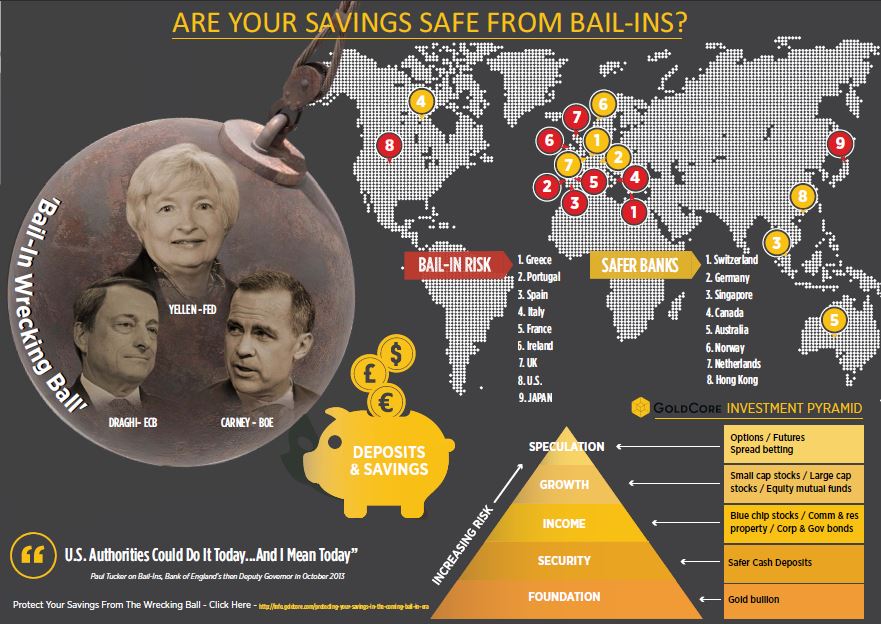
 

Bail-in rules have been in operation since the beginning of 2016. The rules basically mean that desperate governments are able to confiscate some of your savings in times of financial crisis and bank insolvency.

One wonders what other excuses they could find in order to gain access to your funds. Political protests, increased fracturing across the EU and concerns over maintaining control are just a few that spring to mind.

With the same disregard EU officials have shown for the growing discontent across the union, they have dismissed the concerns individuals have for the value and safety of their savings.

Investors should protect themselves from these risks by diversifying their savings and owning physical gold -not paper or digital gold. This reduces the level of counterparty risk your savings are exposed to and ensures some level of sovereignty and financial safety and freedom when it comes to your wealth.

These financial risks including Bail-ins are a threat to all savers in the western world.

Fail to prepare, prepare to fail.

Read our guide on how to protect yourself from bail-ins here

News and Commentary

Gold edges up as dollar eases ahead of ECB meeting (Reuters.com)

U.S. Stock Indexes Fall With Dollar, Treasuries (Bloomberg.com)

Bitcoin splits again, creating a new cryptocurrency called bitcoin gold that then plunged 66% (CNBC.com)

Italy's banking sector still has potential to cause difficulties (RTE.ie)

Venezuela fails to reclaim the gold it pawned to Deutsche Bank (Reuters.com)

Gold’s Low Correlation to Risk Assets a Key Benefit (Bloomberg.com)

Americans Are Retiring Later, Dying Sooner and Sicker In-Between (Bloomberg.com)

Cryptocurrencies Are Likely Inflationary - Good for Gold and Silver (DollarCollapse.com)

Can Switzerland Save The World? (Acting-Man.com)

Betrayed by Banks, 40,000 Businesses Are in Limbo (Bloomberg.com)

Gold Prices (LBMA AM)

26 Oct: USD 1,278.00, GBP 968.34 & EUR 1,082.34 per ounce
25 Oct: USD 1,273.00, GBP 964.81 & EUR 1,081.67 per ounce
24 Oct: USD 1,278.30, GBP 970.36 & EUR 1,087.32 per ounce
23 Oct: USD 1,275.25, GBP 967.79 & EUR 1,085.62 per ounce
20 Oct: USD 1,280.25, GBP 974.27 & EUR 1,084.76 per ounce

Silver Prices (LBMA)

26 Oct: USD 16.97, GBP 12.84 & EUR 14.37 per ounce
25 Oct: USD 16.89, GBP 12.75 & EUR 14.34 per ounce
24 Oct: USD 17.04, GBP 12.92 & EUR 14.49 per ounce
23 Oct: USD 17.00, GBP 12.90 & EUR 14.47 per ounce
20 Oct: USD 17.08, GBP 12.96 & EUR 14.46 per ounce


Recent Market Updates

- Gold Is Valuable Due to “Extreme Rarity” – Must See CNN Video
- Gold Is Better Store of Value Than Bitcoin – Goldman Sachs
- Next Wall Street Crash Looms? Lessons On Anniversary Of 1987 Crash
- Key Charts: Gold is Cheap and US Recession May Be Closer Than Think
- Gold Up 74% Since Last Market Peak 10 Years Ago
- How Gold Bullion Protects From Conflict And War
- Silver Bullion Prices Set to Soar
- Brexit UK Vulnerable As Gold Bar Exports Distort UK Trade Figures
- Puerto Rico Without Electricity, Wifi, ATMs Shows Importance of Cash, Gold and Silver
- U.S. Mint Gold Coin Sales and VIX Point To Increased Market Volatility and Higher Gold
- Global Outlook – Mad, Mad, Mad, MAD World: News in Charts
- Young Guns of Gold Podcast – ‘The Everything Bubble’
- London House Prices Are Falling – Time to Buckle Up

Important Guides

For your perusal, below are our most popular guides in 2017:

Essential Guide To Storing Gold In Switzerland

Essential Guide To Storing Gold In Singapore

Essential Guide to Tax Free Gold Sovereigns (UK)

Please share our research with family, friends and colleagues who you think would benefit from being informed by it.

Wednesday, October 25, 2017

Gold Is Valuable Due to “Extreme Rarity” – Must See CNN Video

Published here: http://www.zerohedge.com/news/2017-10-25/gold-valuable-due-%E2%80%9Cextreme-rarity%E2%80%9D-%E2%80%93-must-see-cnn-video

- Gold's value is due to exceptional rarity: Only 0.00000002% of earth's crust is gold
- Gold's allure and psychology behind it are steeped in history and human psychology

- Gold's colour and texture appeals to basic human survival instincts
- Gold's sheen resembles water and "humans need water in order to survive" 

- Gold remains a sign of wealth but today is also a sign of prudence

Editor Mark O'Byrne

 
Source: Colorscope via CNN

Why do we love gold?

There are so many given reasons. From its presence throughout history, to its role as money, to its status as a symbol of wealth. But what is the psychology behind the human race's ever-present love for gold? How did it begin, why has it survived for so long?

CNN's Colourscope series has recently addressed this question in 'The psychology of gold and why it has that allure' video which is well worth a watch.

Who would have thought that the material we seek to gift to our love ones, store in vaults or even use in medical products first grabbed our attention because of its texture glistening like water? Or, that at its most basic level of attraction we are motivated by its colour?

Gold mindset

The following article covers these points and more as it takes us through gold's psychological impact on humanity, throughout history.

The article is of interest even to those who are familiar with the economic reasons as to why we invest in gold and hold it in such high financial regard. Most interestingly, our love for gold comes down to a very basic fact: the colour and its role as a material are intertwined.

You can read the article below and watch the accompanying video here.

When you think of the color gold, images of grandeur and extravagance are likely to come to mind.
 
For millennia, the metal has adorned crowns and hilts of swords. It has been used to enhance paintings and ornaments to increase their value.
 
In some cultures, gold is a predominant feature of festivals and celebrations. In Eastern cultures, the metal is an integral part of auspicious occasions like marriages and festivals by way of gifts and sacred rituals. Gold also features heavily on the attires of brides and grooms throughout South Asia.
 
Humans' fascination with gold is as old as time itself. The scarce material has a certain appeal to it.
 
Empires have flourished by possessing gold, wars have been fought to control regions harboring rich deposits of the metal and treasure hunters and explorers have spent a lifetime in search of it.
gold materials
But were they fascinated by the metal or its color? The two can be hard to distinguish, said Peter Oakley from the Royal College of Arts in the UK. There is crossover between gold as a material and gold as a color, he said.
 
"The two feed off each other. The idea of gold as a color is intimately connected with our idea of gold as a material," he explained. So, when we think of it as a color, we unconsciously relate to the precious metal -- which in turn conjures images of wealth and success.

'Excrement of the gods'


In the book "Gold: Nature and Culture," art historian Rebecca Zorach and filmmaker and critic Michael Phillips Jr. write that in the Andean region, "the sharp, eye-catching visual effects of shine, gleam, glint, glitter, glow, and strong colors were all considered the phenomena of sacredness."
 
That led to the metal being associated with a shining, otherworldly character attributed to the gods in the religions of many different cultures. "Some of these were bodily associations," the authors write.
 
The Aztecs described gold as the "excrement of the gods," while the Incas thought of it as the "sweat of the sun." In ancient Egypt, gold was considered the "flesh of the gods." Across cultures, it was a sacred material.
 
The book goes on to illustrate the importance of gold in health and medicine. Chinese alchemists believed that drinking potable gold in the form of elixirs, eating from gold plates and using gold utensils helped attain longevity.
 
"Before the 20th century, gold was used to treat conditions as varied as syphilis, heart disease, smallpox and melancholia," the book notes.
 
Today, gold compounds are still thought to have some anti-inflammatory effects.
 
gold medicine

Attracting the eye


The incorruptible nature of gold has an otherworldly allure to it and the reflective quality of the metal gives the impression that it glows from the inside, said Oakley.
When viewed by candlelight, gilded medieval manuscripts, statues and icons in the Eastern Orthodox Church exuded a transcendental quality, glowing as if they were illuminated from the inside.
 
"The color gold causes the eye to move because of the glistening and seemingly moveable surface, similar to the way water moves," said Leatrice Eiseman, executive director of Pantone Color Institute. "Human eyes are always attracted to any surface that has that glistening or undulating movement. This is because humans need water in order to survive."
The origin of gold is closely tied to the sun, adds Eiseman. "Gold is connected to all things that grow and thrive as the sun enables that growth."

Evoking emotion


Human vision can discriminate millions of colors, but it can discriminate trillions of chromatures -- colored textures, said Donald Hoffman, professor of cognitive science at University of California, Irvine.
 
"It is the chromature that targets the human emotions more specifically than uniform color patches," he said.
 
Hoffman believes the reason chromatures can target human emotions more specifically than uniform color patches is that they contain far more information than color patches.
 
He demonstrated the concept with two pictures -- a section of brown grizzly bear fur and the same brown color in plain background. When looking at the chromature, our mind can immediately grasp that we are looking at a bear, he explained.
 
"Evolution would have more success training the emotional system to be wary of the bear fur chromature than to be wary of the uniform color patch of the same average color."
Similarly, when we look at a gold ring versus a standard patch of uniform color, we see interesting highlights on the ring because the metal is highly reflective.
 
"Companies are using genetic algorithms to evolve chromatures and target specific emotions they want people to experience with respect to their product or brand. It turns out to be quite powerful," he adds. For example, "A company might, for instance, want to convey the idea that their product is soft and warm. Then we would start with closeup images of patches of soft things, such as the fur of a rabbit and the down of a goose, and warm things, such as glowing embers of charcoal or a warm sunset," Hoffman explained.
 
The same could be applied to evoke emotions linked to gold -- how does it make you feel?

A sign of success


In ancient Rome and medieval Europe, sumptuary laws prohibited people from wearing too much gold -- or not wearing it at all unless they were from a noble family.
 
Gold leaf has been used liberally in artwork which hinted at the status of the patron who commissioned it.
 
All societies value gold and investing in gold has survived for centuries through marketing -- even glorified.
 
"(Gold) carries with it the messaging that you should own it. It is a learned, conditioned response," said Eiseman -- but not so much that it becomes tacky, she adds.
gold bling rapper
In popular culture, musicians flaunt their gold bling. The underlying message being that they are good at what they do and have amassed a lot of wealth. "In a lot of cultures, the word for money derives from the word for gold. In China, the ideogram for money is the ideogram for gold," Oakley said.
Gold continues to be featured heavily in religion and religious rituals alike. It decorates the papal regalia, spires, domes and minarets of temples, churches, monasteries and mosques worldwide.
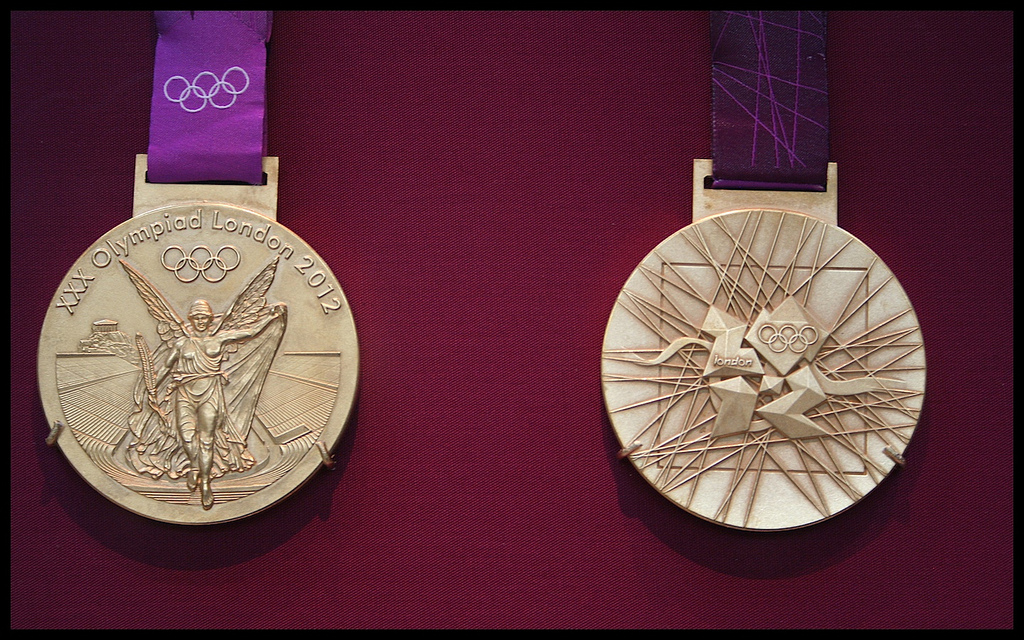
Golden trophies like Olympic medals, the Nobel Prize, Oscars and Emmys are presented to people who display a unique talent. "The idea is the prize made of a rare material is given to people with display talent as rare as the material," said Sally Augustin, an environmental and design psychologist.
Psychologically, this results in gold being a color of motivation and achievement.
People have achieved financial freedom with gold throughout history and the prudent one's are doing so today.

News and Commentary

Gold slips on firmer equities, dollar amid Fed chair speculation (Reuters.com)

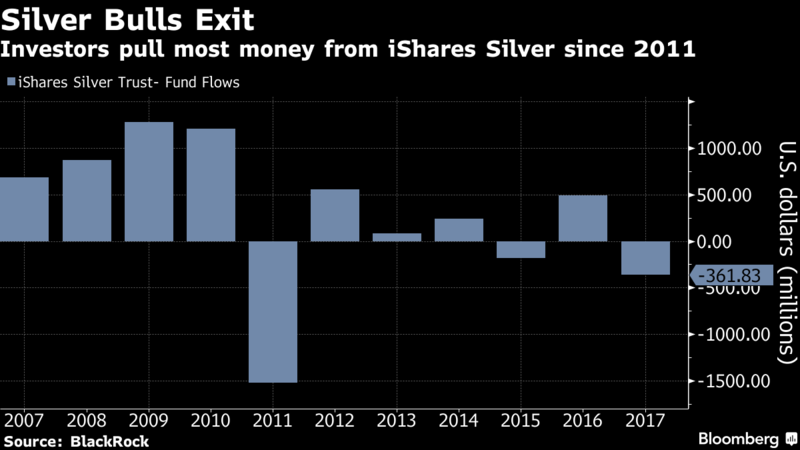
Investors Are Dumping This Silver ETF at the Fastest Pace Since 2011 (Bloomberg.com)

U.S. Stocks on Record Run After Strong Earnings (Bloomberg.com)

Bitcoin Retreats as Another Cryptocurrency Offshoot Appears (Bloomberg.com)

Noble Group's Next Battle Will Be Over $3 Billion Debt Pile (Bloomberg.com)

U.S. jury finds ex-HSBC executive guilty of fraud in $3.5 billion currency trade (Reuters.com)


Source: Bloomberg

Here's Why Bitcoin Won't Replace Gold So Easily (Forbes.com)

Americans Have More Debt Than Ever — Creating An Economic Trap (BusinessInsider.com)

Here Is The IMF's Global Financial Crash Scenario (ZeroHedge.com)

Politicians and Unfolding Pensions Disaster - Are You Infuriated Yet? (GoldSeek.com)

History Of Gold and Silver Flows From South America to Medieval Europe and Today (LMBA.org)

Gold Prices (LBMA AM)

25 Oct: USD 1,273.00, GBP 964.81 & EUR 1,081.67 per ounce
24 Oct: USD 1,278.30, GBP 970.36 & EUR 1,087.32 per ounce
23 Oct: USD 1,275.25, GBP 967.79 & EUR 1,085.62 per ounce
20 Oct: USD 1,280.25, GBP 974.27 & EUR 1,084.76 per ounce
19 Oct: USD 1,283.40, GBP 975.64 & EUR 1,087.42 per ounce
18 Oct: USD 1,280.65, GBP 972.53 & EUR 1,090.47 per ounce

Silver Prices (LBMA)

25 Oct: USD 16.89, GBP 12.75 & EUR 14.34 per ounce
24 Oct: USD 17.04, GBP 12.92 & EUR 14.49 per ounce
23 Oct: USD 17.00, GBP 12.90 & EUR 14.47 per ounce
20 Oct: USD 17.08, GBP 12.96 & EUR 14.46 per ounce
19 Oct: USD 17.03, GBP 12.93 & EUR 14.40 per ounce
18 Oct: USD 16.95, GBP 12.86 & EUR 14.42 per ounce


Recent Market Updates

- Gold Is Better Store of Value Than Bitcoin – Goldman Sachs
- Next Wall Street Crash Looms? Lessons On Anniversary Of 1987 Crash
- Key Charts: Gold is Cheap and US Recession May Be Closer Than Think
- Gold Up 74% Since Last Market Peak 10 Years Ago
- How Gold Bullion Protects From Conflict And War
- Silver Bullion Prices Set to Soar
- Brexit UK Vulnerable As Gold Bar Exports Distort UK Trade Figures
- Puerto Rico Without Electricity, Wifi, ATMs Shows Importance of Cash, Gold and Silver
- U.S. Mint Gold Coin Sales and VIX Point To Increased Market Volatility and Higher Gold
- Global Outlook – Mad, Mad, Mad, MAD World: News in Charts
- Young Guns of Gold Podcast – ‘The Everything Bubble’
- London House Prices Are Falling – Time to Buckle Up
- Perth Mint Gold Coins Sales Double In September

Important Guides

For your perusal, below are our most popular guides in 2017:

Essential Guide To Storing Gold In Switzerland

Essential Guide To Storing Gold In Singapore

Essential Guide to Tax Free Gold Sovereigns (UK)

Please share our research with family, friends and colleagues who you think would benefit from being informed by it.
Tuesday, October 24, 2017

Gold Is Better Store of Value Than Bitcoin – Goldman Sachs

Published here: http://www.zerohedge.com/news/2017-10-24/gold-better-store-value-bitcoin-%E2%80%93-goldman-sachs

Gold is better store of value than bitcoin - Goldman Sachs report

 - Gold will continue to perform well thanks to uncertainty and wealth demand
- Bitcoin's volatility continues to impact its role as money
- Gold up 12% in 2017, bitcoin over 600%
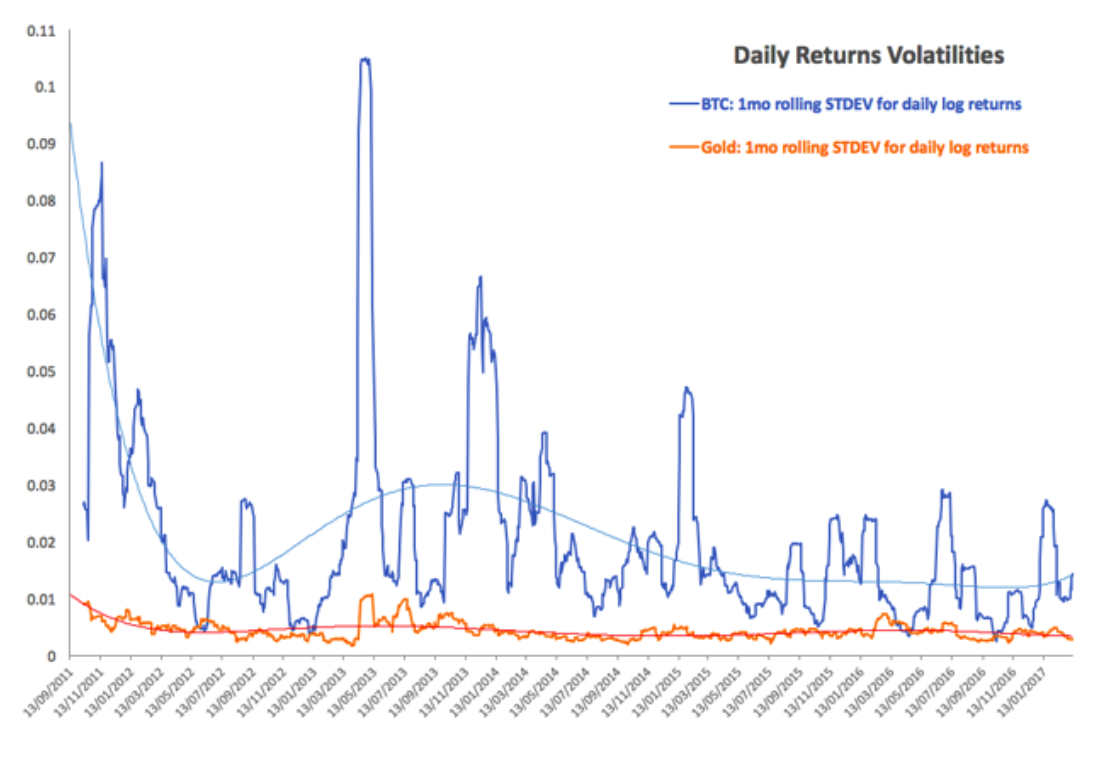
- BTC is six times more volatile than gold - see chart
- Gold's history and physical property shows it meets requirements as a medium of exchange and store of value


Since the birth of bitcoin there has been one question that has repeatedly grabbed headlines and led debates all over the world - will bitcoin replace gold?

The latest to weigh in on this question is Goldman Sachs which, in a research note entitled 'Fear and Wealth', has concluded that gold is better than bitcoin.

Examining gold and bitcoin against the key characteristics of money, the report concludes that “Precious metals remain a relevant asset class in modern portfolios, despite their lack of yield...They are neither a historic accident or a relic.”

Goldman Sachs looked at four key properties of a long-term store of value - durability, portability, intrinsic value and unit of account - concluding that the reasons why gold was originally adopted remain relevant to today.

They believe as the level of uncertainty increases investors increase their exposure to gold. Fear is the medium to short-term driver of the gold price. The long-term driver, Goldman Sachs believes, is wealth.

The debate of gold versus bitcoin is really a rather tedious one. So rarely do you see any other two assets pitched against one another. Yet those choosing to debate it manage to find common ground between the two, so the debate rages on. Bitcoin's finite supply and occasional rise on the back of geopolitical tensions has led to such comparisons.

Conversely the debate is relevant as both assets are ones which evoke a strong emotive reaction and raise similar questions about the state of the economy and the investment space. As bitcoin's market cap increases (heading to $100 billion) it is inevitable that it will continue to grab the attention of the likes of Goldman Sachs and institutional investors. Most recently, Ray Dallio, the world's biggest fund manager felt the need to point out the bitcoin bubble and how he favoured gold over the cryptocurrency.

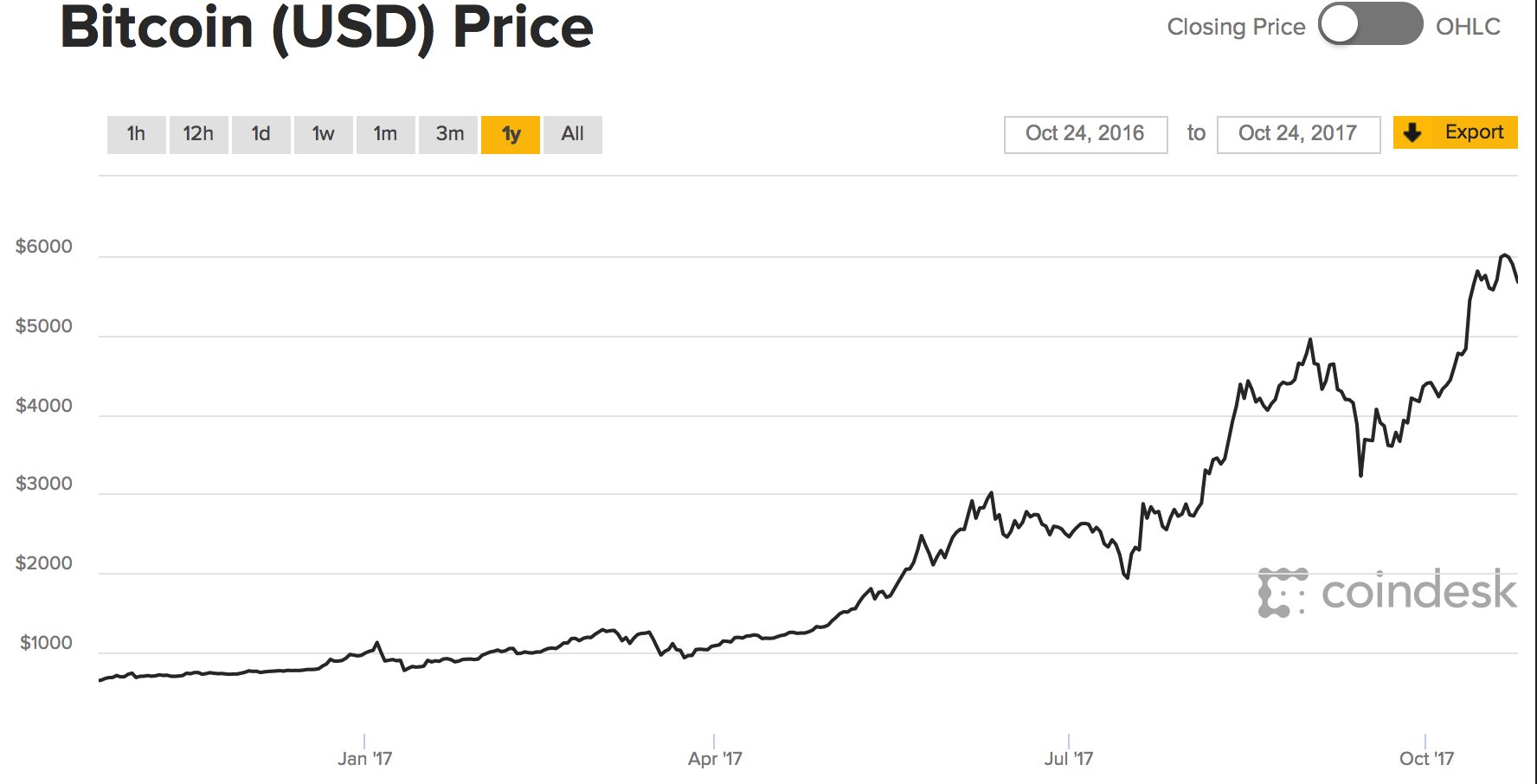
The debate is of particular interest this year given bitcoin's performance. It has climbed from around $1,000 at the start of the year to nearly $6,000. In the same period gold is up 12%.

"Gold wins out over cryptocurrencies in a majority of the key characteristics of money,"

The first record of gold being used as money is from around 700 B.C. when the Lydians combined it with silver, to form electrum coins.

Bitcoin's role as money is one which is still being established. Many of the problems it faces are down to infrastructure and price volatility.

Goldman Sachs addressed the main characteristics that make a medium of exchange and found gold to outperform bitcoin.

The findings were summarised by Bloomberg:

Durability: While both require expertise for correct long-term storage, gold wins because cryptocurrencies are vulnerable to hacking through online wallets or the user’s computer or smartphone, are subject to regulatory risk, and network and infrastructure risk during a crisis.

Portability: Transferring bullion can be expensive, given its weight, need for a high level of security and high import taxes in some countries, such as India. In contrast, it’s much faster and cheaper to move bitcoins.

Intrinsic value: There’s a limited supply of gold and other precious metals in the Earth’s crust, whereas in the case of cryptocurrencies, it’s easy to create alternatives, meaning there’s effectively no control over supply at a macroeconomic level and no intrinsic value due to rarity.

Unit of account: Gold is better at holding its purchasing power, and has much lower daily volatility. Bitcoin/dollar volatility has averaged almost seven times that of gold in 2017, the bank said.

Chart from March 2017

In regard to volatility the Fear and Wealth report stressed how “a 3-day USD/BTC put option at historical average volatility results in a premium of around 2.3%.” This is clearly a prohibitive premium. Fiat to bitcoin volatility this year stands at more than six times that seen with gold.

The authors conclude that these factors  “clearly illustrate that Bitcoin as a unit of account and medium of exchange is nowhere near as favourable as it first appears.”

Is gold that immovable?

Goldman Sachs found gold was only at a disadvantage to bitcoin when it came down to portability. This is something that is often cited about gold.

Bullion is often accused of being bulky and therefore dysfunctional as a form of money. However, there are two main factors that are overlooked by those who argue this:

- Size of gold bars and coins relative to value

If you consider that the high income households in the UK are estimated to have around £63,000 (on average) in savings then this would be just 2 kilogram bars of gold. About the size of a smart phone each. Not exactly immovable.

Then consider coins, far more portable and a great way to divide up your gold holdings.

Should you hold gold (either at home or in a vault) then you are rarely under the same requirements to move the gold as you are if you had the equivalent held in a bank. Often banks demand a few days' notice, or limit the amount of cash you can move in one go. Arguably, less portable than a trusty gold bar.

- Technology

In order to spend bitcoin you are required to be 'online'. Fantastic for those of us who are able to go anywhere without worrying about connectivity. Not so great for those countries, remote areas or disaster struck places (such as Puerto Rico) that do not find it so easy to just jump online and shift a few bitcoin.

Spending a few gold coins, or even a small gold bar, does not require you to partake in an online transaction. Should you find yourself in a position where you need to spend your gold, a power outage or loss of connection will not be your biggest problem.

Uncertainty and fear: the drivers of gold

It is interesting that given the title of the report is Fear and Wealth, the authors do not consider why gold's portability is relevant and addresses fears surrounding uncertainty.

There are a number of fears about the direction both the financial and political spheres are heading in. Consider real interest rates issues, debasement, sovereign balance-sheet, geopolitical and other market risks.

The main fear is that no-one knows how bad things will be and so investment decisions are coming down to uncertainty. This is good for gold and its price.

“Stated more simply, we are talking about the drivers of ‘risk-on, risk-off’ behavior in markets...This factor matters so much to gold precisely because it is a safe-haven asset. Accordingly, as uncertainty increases, preferences shift towards having more gold in the portfolio, driving prices higher."

People like to hold gold because they can balance the uncertainty with the certainty that gold will be accepted regardless of how things pan out. Holders know that they can easily transport and transfer it, in order to make an exchange for goods. They cannot know this with bitcoin, both because of its design and because it has never been tested in such a way.

Gold investors are also exposed to far less uncertainties when it comes to professional storage, something Goldman Sachs does acknowledge:

"While both require expertise for correct long-term storage, gold wins because cryptocurrencies are vulnerable to hacking through online wallets or the user’s computer or smartphone, are subject to regulatory risk, and network and infrastructure risk during a crisis,”

Despite this acknowledgement it is interesting that 'portability' is still seen as a negative for gold. This has not restricted gold too much in the past.

Long-term investors are clearly also not too concerned about portability either. Goldman Sachs believes these investors are the key to gold's long-term performance, thanks to a desire to build and protect their wealth.


Gold's future 

Goldman Sachs forecasts that emerging market economies will be the key drivers of wealth-based demand for gold.

“As more EM economies -- including China -- are set to grow to these income levels over the next few decades, the underlying long-term demand picture remains supportive of gold prices...While fear can spike or fall relatively quickly, wealth tends to accumulate slowly. This makes wealth an important, but easy to overlook in short-term forecasting, driver of gold.”

The likes of China and India are experiencing a rapidly growing middle-class, all of whom are interested in buying gold. Between the two countries they account for 60% of the global jewellery market.

This is likely to boost long-term demand for the precious metal given rapid accumulation of gold tends to occur when per-capita gross domestic product reaches roughly $20,000 to $30,000.

There is still a long-way to go for 29 developing countries, each of whom have an interest in holding gold.

“Our modeling, based on the historical experiences of 29 countries at various stages of development since the early 1990s, suggests that this is still very far from peak annual demand,”

Uncertainty will lead to wealth protection in the future 

Goldman Sachs expects to see the price of gold falter somewhat before reaching nearly $1,400/oz in 2018. The expected stumble is down to tightening of monetary policy and a moderation of the fear factor.

Investors should not be put off by Goldman Sachs' forecast. If there is any takeaway from their report it is that gold is both a long-term investment and a safe haven.

Whilst fear and uncertainty may well subside, they will not disappear until the factors that cause them also vanish. In all likelihood this is impossible without years of serious economic and political change. Unlikely, especially in the West with short-term policies for maximum political gains and disastrous economic consequences.

By showing gold has true value as a medium of exchange and store of value, Goldman Sachs has demonstrated how important it is to hold some in your portfolio. You may not feel fearful but you cannot be be sure of no uncertainties.

Those who hold gold as a form of financial insurance will benefit in two ways. Firstly, they have a balanced portfolio that will support them in times of unforeseen crises. Secondly, should a crisis be averted then gold will accumulate in value as fiat devaluation continues, thus still protecting the investor and their savings.

Bitcoin has done a stellar job in motivating millennials into taking an interest in money and investments, however the cryptocurrency market is in itself an entire uncertainty. It's main premise - as a medium of exchange - has been rapidly dismissed on several accounts.

As throughout history, gold remains a vital store of value. It's role as money and as a safe haven continues to be proven thanks to the actions of central bankers and those using technology to affect monetary markets.


News and Commentary

Gold recovers from two-week low on softer dollar (Reuters.com)

Gold recovers from 2-week lows and rises above $1280 (FXStreet.com)

Wall St. retreats from record highs; tech, industrials drag (Reuters.com)

U.S. Stocks Drop at Start of Big Week for Earnings (Bloomberg.com)

Venezuela allows $1.7 billion gold swap with Deutsche to lapse (Reuters.com)

Spanish Banks Fall on Fresh Political Upheaval (TheStreet.com)


Source: US Funds via Forbes

Here's Why Bitcoin Won't Replace Gold So Easily (Forbes.com)

Americans Have More Debt Than Ever — Creating An Economic Trap (BusinessInsider.com)

Here Is The IMF's Global Financial Crash Scenario (ZeroHedge.com)

Politicians and Unfolding Pensions Disaster - Are You Infuriated Yet? (GoldSeek.com)

History Of Gold and Silver Flows From South America to Medieval Europe and Today (LMBA.org)

Gold Prices (LBMA AM)

24 Oct: USD 1,278.30, GBP 970.36 & EUR 1,087.32 per ounce
23 Oct: USD 1,275.25, GBP 967.79 & EUR 1,085.62 per ounce
20 Oct: USD 1,280.25, GBP 974.27 & EUR 1,084.76 per ounce
19 Oct: USD 1,283.40, GBP 975.64 & EUR 1,087.42 per ounce
18 Oct: USD 1,280.65, GBP 972.53 & EUR 1,090.47 per ounce
17 Oct: USD 1,289.70, GBP 973.47 & EUR 1,097.02 per ounce

Silver Prices (LBMA)

24 Oct: USD 17.04, GBP 12.92 & EUR 14.49 per ounce
23 Oct: USD 17.00, GBP 12.90 & EUR 14.47 per ounce
20 Oct: USD 17.08, GBP 12.96 & EUR 14.46 per ounce
19 Oct: USD 17.03, GBP 12.93 & EUR 14.40 per ounce
18 Oct: USD 16.95, GBP 12.86 & EUR 14.42 per ounce
17 Oct: USD 17.11, GBP 12.96 & EUR 14.55 per ounce


Recent Market Updates

- Next Wall Street Crash Looms? Lessons On Anniversary Of 1987 Crash
- Key Charts: Gold is Cheap and US Recession May Be Closer Than Think
- Gold Up 74% Since Last Market Peak 10 Years Ago
- How Gold Bullion Protects From Conflict And War
- Silver Bullion Prices Set to Soar
- Brexit UK Vulnerable As Gold Bar Exports Distort UK Trade Figures
- Puerto Rico Without Electricity, Wifi, ATMs Shows Importance of Cash, Gold and Silver
- U.S. Mint Gold Coin Sales and VIX Point To Increased Market Volatility and Higher Gold
- Global Outlook – Mad, Mad, Mad, MAD World: News in Charts
- Young Guns of Gold Podcast – ‘The Everything Bubble’
- London House Prices Are Falling – Time to Buckle Up
- Perth Mint Gold Coins Sales Double In September
- Survey shows UK and US Pensions Crisis is Imminent


Important Guides

For your perusal, below are our most popular guides in 2017:

Essential Guide To Storing Gold In Switzerland

Essential Guide To Storing Gold In Singapore

Essential Guide to Tax Free Gold Sovereigns (UK)

Please share our research with family, friends and colleagues who you think would benefit from being informed by it.

Monday, October 23, 2017

Are Cryptocurrencies Inflationary?

Published here: http://www.zerohedge.com/news/2017-10-23/are-cryptocurrencies-inflationary-0


Are Cryptocurrencies Inflationary?

Posted with permission and written by John Rubino, Dollar Collapse 

Are Cryptocurrencies Inflationary? - John Rubino


There’s a debate raging over what, exactly, bitcoin and the thousand or so other cryptocurrencies actually are. Some heavy-hitters are weighing in with strong, if not always coherent opinions:


Jamie Dimon calls bitcoin a ‘fraud’


JPMorgan Chase CEO Jamie Dimon did not mince words when asked about the popularity of virtual currency bitcoin.

Dimon said at an investment conference that the digital currency was a “fraud” and that his firm would fire anyone at the bank that traded it “in a second.” Dimon said he supported blockchain technology for tracking payments but that trading bitcoin itself was against the bank’s rules. He added that bitcoin was “stupid” and “far too dangerous.”

————————

Peter Schiff: Even at $4,000 bitcoin is still a bubble


One of the best-known among the bears, investor Peter Schiff, is now making his case in even stronger terms for why bitcoin has advanced ever farther into bubble territory.

Schiff, who predicted the 2008 mortgage crisis, famously referred to bitcoin as digital fool’s gold and compared the cryptocurrency to the infamous bubble in Beanie Babies.

Moreover, the recent run-up in bitcoin hasn’t softened Schiff’s view: If anything, it’s reinforced his sense of impending doom.

Schiff told CoinDesk:

“There’s certainly a lot of bullishness about bitcoin and cryptocurrency, and that’s the case with bubbles in general. The psychology of bubbles fuels it. You just become more convinced that it’s going to work. And the higher the price goes, the more convinced you become that you’re right. But it’s not going up because it’s going to work. It’s going up because of speculation.”

“What it comes down to is that bitcoin ain’t money.”

“Libertarian-minded crypto fans saw this was a way to liberate people from the government,” he said, concluding:

“I think it will have the opposite effect. People are going to lose money. This could really backfire, giving libertarian ideals a bad name by making fiat look good. The downside can be really spectacular.”

————————

Hedge fund manager James Altucher: Cryptocurrencies Could Be Worth $200 Trillion One Day


I’m not exaggerating when I say cryptocurrencies are the biggest innovation since the internet. We’re on the ground floor of an enormous trend that’s going to change the world.

Cryptocurrencies are currencies with no government in the middle. No bank in the middle. No organizations in the middle keeping track of all your payments, or taking advantage of your spending so they can invade your privacy, and on and on.

Cryptocurrencies solve trillions of dollars’ worth of problems, which is why they will be worth trillions of dollars one day.

Consider the potential:

There is currently $200 trillion in cash, money and precious metals used as currencies in the world. Meanwhile, there’s only $200 billion in cryptocurrencies. Cryptocurrencies are eventually replacing traditional currencies.

So that $200 billion will eventually rise to the level of currencies. And probably sooner than we can imagine.

Ask yourself, why does the world need multiple currencies? There’s actually no real reason. The only reason we have a U.S. dollar and also a Canadian dollar is that in 1770 the people in Canada decided not to join the U.S. So an artificial border created two currencies. It’s all dictated by artificial borders.

In the past, an ounce of gold would be accepted almost anywhere in the world. In that sense, unbacked modern fiat currencies are a step backwards.

But in cryptocurrency world, there are what I call “Use Borders.” Every currency is defined by its use. For instance, Ethereum is like Bitcoin but it makes “smart contracts” easier. Contract Law is a multi-trillion dollar industry so this has a huge use case. Filecoin makes storage easier. It’s a $100 billion industry. And on.

Studying the “use” cases, and the effectiveness of the coin to solve those use cases can help us make investment decisions confidently.

This is the great promise of cryptocurrencies and why they will change the world. It’s just getting started.

Don’t try to make sense of the above. Instead, let’s just assume that the cryptocurrency universe will continue to expand for a while and narrow the discussion down to a single question: Are cryptocurrencies inflationary? That is, will their spread lead to higher or lower prices for the average person, and greater or lesser financial instability for the markets, and what does this mean for today’s fiat currencies?


One common opinion is that cryptocurrencies can’t be inflationary because their owners have to pay for them in fiat currencies. So one bitcoin bought means one dollar, yen, or euro sold, with the net effect on prices being zero.


This makes intuitive sense at first glance, but only holds for the moment of purchase. Consider what happened after someone in, say, 2014 exchanged dollars for bitcoins. The dollars held most of their value, which means the total amount of dollar purchasing power in the world remained constant. But those bitcoins went up by several thousand percent, dramatically increasing the purchasing power – and thus the potential inflationary impact – of the bitcoin complex.


A real world example is Julian Assange:


Julian Assange Says Wikileaks Has Made a 50,000% Return on Bitcoin. Here’s What That Means


Wikileaks has seen an amazing return on investments in bitcoin, founder Julian Assange says, and he is “thanking” the U.S. government for forcing the controversial organization to get into bitcoin in the first place.

In a Tweet on Saturday, Assange said the group’s investment in the cryptocurrency has seen a return greater than 50,000% since 2010. Wikileaks began investing in bitcoin back then because global payment processors like Visa, Mastercard, and Paypal were under pressure by the U.S. government to block the ability of the group to take payments.

In fact, Bitcoin has seen a more-than 9 million percent return over the dates Assange references. In certain periods in 2010, bitcoin was trading for mere pennies. According to coindesk.com, one unit of bitcoin is now worth a record high of roughly $5,700. Anyone buying bitcoin through much of 2011 and 2012, when one unit was sometimes trading below $1 and was often under $10, would indeed see a return on investment of more than 50,000%, assuming they never sold.

The difference between Wikileak’s purchasing power pre and post-bitcoin is immense. If Assange decides to spend his windfall on goods and services he’d have, at the margin, an inflationary impact on the stuff he buys.


So the answer to the question of cryptocurrencies’ impact on price levels depends on how their values change. If they rise after people buy them, then they’re inflationary. If they rise a lot, they’re potentially very inflationary.


In this sense, it might be helpful to view cryptocurrencies as assets like houses or stocks rather than as money. When they rise relative to fiat currencies they increase the purchasing power of their owners, generate a “wealth effect” in which owners feel richer and more comfortable with splurging, and in that way push up prices. Based on the following chart, a lot of early adopters are feeling a whole lot richer these days.


Which then leads to what might be the major cryptocurrency theme of the coming year: Why would governments allow such an inflationary supernova to explode right in front of them when they presumably have the power to stop it? Here’s one possible — and of course disturbing — answer:


Will cryptocurrencies trash cash? ‘Fedcoin’ could do it


Economist Ed Yardeni of Yardeni Research asks the obvious question: Why would central banks—which derive their power as the centralized gatekeepers of fiat currency creation, check clearing and payment processing—embrace a movement that’s primary motivation has been to usurp this power in a decentralized way?

Part of that, according to St. Louis Federal Reserve president James Bullard, is recognition that the technology has achieved critical mass. Thus, there’s a fear of being left behind as the very foundations of banking and monetary policy—intermediation, funds transfers, transactions—rapidly change, not unlike the way the creation of mortgage-backed securities and credit default swaps changed housing finance in the mid-2000s.

There’s another, more self-serving purpose: Central banks could use their own cryptos to put the squeeze on paper currency. Why? To facilitate the use of negative interest rate policy, which has been deployed in Europe and Japan in recent years in half-baked forms. Currently, in Switzerland, short-term interest rates are at -0.75%.

When another recession hits, especially if one comes soon, a dive to even deeper rates of negative interest would be hampered by the hoarding of cash since banks would charge for deposits (vs. absorbing the cost of negative rates themselves, as they’re doing now). This is known by the economics cognoscenti as the “zero lower bound” in that interest rates cannot go much below negative before the traditional functions of deposits, loans and fractional money creation break down. Mattress stuffing ensues en masse.

The Fed is clearly thinking about it. In testimony to Congress last year, Fed chairman Janet Yellen admitted policymakers “expect to have less scope for interest-rate cuts than we have had historically,” adding she would not completely rule out the use of negative interest rates.

The BIS­—the central bank of central banks—in its latest quarterly review posited that a crypto backed by the Fed “has the potential to relieve the zero lower bound constraint on monetary policy.” Any distinction between regular dollars and this new “Fedcoin” could be removed by establishing a fixed one-to-one valuation. Any competition
from the likes of bitcoin could be squashed by regulation; not unlike how the private ownership of gold was outlawed in the 1930s when it threatened the Fed’s ability to ease credit conditions.

At the risk of being repetitious, pretty much all of the above looks good for gold and great for silver.


Questions or comments about this article? Leave your thoughts HERE.


Are Cryptocurrencies Inflationary?

Posted with permission and written by John Rubino, Dollar Collapse