Thursday, April 26, 2018

China Takes the Long View on Gold-Silver… and So Should You

Published here: http://goldsilverworlds.com/investing/china-takes-the-long-view-on-gold-silver-and-so-should-you/

A cursory look at Chinese history can convince you that China should not be underestimated when it sets its sights on a particular goal.

Even before Mao Zedong took over the reins in 1949, and the first Five Year Plan began in 1953, centuries of history demonstrated that long-term planning, while not always meeting expectations, is a core behavioral trait of the Chinese psyche.

And more often than not, it has enabled them to hit the mark.

Expect eventual success for the One Belt, One Road Initiative – the world’s largest construction project, estimated to cost $80 trillion dollars – linking the Asian mainland, (including Central Asia) with Europe via high speed rail, communications links and vibrant financial trading platforms.

And expect this project to be a major factor in bringing about what Doug Casey and others believe could become the greatest commodities bull-run that most of us now living are going to see.

The petro-yuan. A game-changer?

And oh, by the way, China recently officially launched a petro-yuan contract at the Shanghai International Energy Exchange. It marks the first time overseas investors have been able to access a Chinese commodity market – an oil futures contract – that can be settled, not only with U.S. dollars, but also Chinese Yuan, eventually a basket of currencies… and gold.

Asian Analyst, Pepe Escobar sees clearly where this is heading, saying:

As the yuan progressively reaches full consolidation in trade settlement, the petro-yuan threat to the US dollar, inscribed in a complex, long-term process, will disseminate the Holy Grail: crude oil futures contracts priced in yuan fully convertible into gold…

 That means China’s vast array of trade partners will be able to convert yuan into gold without having to keep funds in Chinese assets or turn them into US dollars… Still, the whole petrodollar edifice lies on OPEC – and the House of Saud– pricing oil in US dollars; as everyone needs greenbacks to buy oil, everyone needs to buy (spiraling) US debt. Beijing is set to break the system – as long as it takes.

Meanwhile gold will continue rising to a level where at some point, Beijing decides to set a conversion rate. When this “golden moment” arrives, the effects on global oil trade – and U.S. continued supremacy in this arena – will be profound. Mining Analyst, Byron King doesn’t mince any words about it. Says he,

China’s vast array of trade partners will be able to convert yuan into gold without having to keep funds in Chinese assets or turn them into U.S. dollars. It’s a straight-up way to bypass the buck. And what if Saudi Arabia – among China’s largest oil suppliers – agrees to accept yuan instead of dollars? It’ll be a bomb-down-the-funnel for U.S. dollar hegemony in the world.

Gold-for-Oil is just one element which will take precious metals to new all-time highs.

For the last several years, we’ve discussed many of these factors, about which readers can fully test their understanding by perusing scores of reports and essays archived here at https://www.moneymetals.com/news You can also find a steady stream of informative, relevant, actionable information on “The Silver Guru” David Morgan’s Blog.

Once this trend fully gets under way – sooner than most expect – the price you’re looking at for physical gold (and silver with its 90% directional gold- correlation price movement) will quickly recede in the rear-view mirror.

Here are just a few recent commentaries that should give you a sense of the structural changes in these markets, making them increasingly subject to explosive moves on the upside – without sending you an invitation to board the train beforehand.

The bottom line is gold is nearing a major bull breakout above $1365. That will turn psychology bullish and bring traders back in droves. Gold is rallying ever closer to new bull-market highs as evidenced by its massive multi-year ascending-triangle chart pattern now nearing a bullish climax. Today gold is only a couple percent below that decisive breakout, which will finally blast it back onto the radars of investors. – Adam Hamilton, Zeal Speculation and Investment

“We see a massive base building in gold. Massive. It’s a four-year, five-year base in gold. If we break above this resistance line, one can expect gold to go up by, like, a $1,000. . .” Doubleline CEO, Jeff Gundlach, the “Bond King”

“With the growth of high-end consumption and the development in second and third-tier cities, the Chinese market will show its substantial demand, mostly unexplored, for physical gold, as more and more people start to realize gold’s stored and retaining values in the long term.” – Song Xin, China Gold Association, April 18, 2018.

So how should you consider handling this situation?

Yes, we’ve been waiting “quite awhile” for this trend to get underway, creating fireworks for metals’ holders. And yes, a few people have become impatient, and actually sold back their metal – which may have taken years to accumulate. But just remember, it’s less a question of if, rather than when this all comes together.

Successful metals’ owners who have prospered since the beginning of the bull run in 2000, got there – and stayed onboard – by following a few sensible rules.

Does this look like an established trend? (Courtesy goldchartsrus.com)

They listen to the “experts” and pay attention to big changes, like the Chinese yuan-for-oil event we’re discussing here.

In addition, they look at what the charts tell them – that Asia continues to suck up gold and silver from the West like a proverbial vacuum cleaner. The Silk Road Gold Total Reserves Plus Demand chart nearby confirms this in spades. They touch base with risk tolerance, taking stock of their financial capability to participate. And acquire metal on a regular basis (without going ‘all in’ at any particular price point), regardless of that the price is doing that month.

They understand that profoundly positive things come to those who are patient, have a plan… and who then act on it. So, ask yourself today, “Am I willing – like the Chinese – to persevere for ‘as long as it takes'”?

David Smith is Senior Analyst for TheMorganReport.com and a regular contributor to MoneyMetals.com. For the past 15 years, he has investigated precious metals’ mines and exploration sites in Argentina, Chile, Mexico, Bolivia, China, Canada, and the U.S. He shares his resource sector findings with readers, the media, and North American investment conference attendees.

The post China Takes the Long View on Gold-Silver… and So Should You appeared first on Gold Silver Worlds.

House Monetary Policy Committee Member Questions Treasury and Fed about Their Gold Activities

Published here: http://goldsilverworlds.com/money-currency/house-monetary-policy-committee-member-questions-treasury-and-fed-about-their-gold-activities/

Washington, DC (April 25th, 2018) – A Member of Congress posed some pointed questions to the Federal Reserve and the U.S. Treasury this week about their activities involving America’s gold reserves, including, apparently, efforts to “drive gold out of the world financial system in favor of the Federal Reserve Note or Special Drawing Rights issued by the International Monetary Fund.”

In a letter dated April 24, Representative Alex Mooney (R-WV) wrote to Jerome Powell, Chairman of the Federal Reserve, and Steven Mnuchin, Secretary of the U.S. Treasury, raising concerns about their formal policy to devalue the Federal Reserve Note (e.g. “inflation targeting”) and requesting information about the United States’ use of, and position on, gold.

“The purchasing power of our currency has fallen some 97% since Congress passed the Federal Reserve Act in 1913, with an acceleration in the rate of decline occurring since the early 1970s when the final link to gold was severed,” wrote Mooney while also pointing out there had been almost no inflation in the U.S. prior to the creation of the Federal Reserve System.

“This Fed policy of creating inflation has the effect of driving up the cost of virtually everything my West Virginia constituents consume, while simultaneously reducing the real value of their pensions, savings, and fixed income payments,” Mooney continued.

In his capacity as a member of the House Financial Services Committee and its Monetary Policy and Trade subcommittee, Mooney has asked the Fed and Treasury to answer the following questions in writing:

  1. Records in the archives of the historian of the U.S. State Department describe U.S. government policy in recent decades as aiming to drive gold out of the world financial system in favor of the Federal Reserve Note or Special Drawing Rights issued by the International Monetary Fund.

Is this still U.S. government policy toward gold? If not, what IS the U.S. government’s current policy toward gold?

  1. I have heard complaints that the U.S. gold reserve has not been fully audited for many decades, particularly as there seems to have been no acknowledgement of – or account for – “swaps” and leases of gold or arrangements for such to which the U.S. government has been a party.

Does the U.S. government, through the Treasury Department, the Federal Reserve System, or any other agency or entity, transact in gold or gold derivatives either directly or through intermediaries? If so, what are those transactions and what are their objectives?

  1. Does the U.S. government undertake any transactions in gold or gold derivatives through the Bank for International Settlements, Bank of England, or other central banks or governments? If so, what are these transactions and their objectives?

Stefan Gleason, Executive Director of the Sound Money Defense League said, “In recent decades, government officials and central banks have almost entirely kicked gold out of the monetary system with disastrous effects, particularly for the average American.”

“A return to sound money, i.e. gold and silver, would usher in a new era of investment, savings, stable prices, and fiscal discipline.”

“We look forward to an explanation from Secretary Mnuchin and Chairman Powell regarding the government’s activities using America’s gold, including to what extent America’s gold reserves have been put at risk or used for what might be viewed as dubious purposes.”

Congressman Mooney’s letter can be accessed here.

The Sound Money Defense League is an Idaho-based public policy group working nationally to bring back gold and silver as America’s constitutional money. 


The post House Monetary Policy Committee Member Questions Treasury and Fed about Their Gold Activities appeared first on Gold Silver Worlds.

Thursday, April 5, 2018

Ethereum Price Forecast: ETH Q1 Review Shows Odd Silver Lining

Published here: https://www.profitconfidential.com/cryptocurrency/ethereum/eth-price-forecast-eth-q1-review-shows-odd-silver-lining/

Ethereum News Update
The first quarter of 2018 was historically bad for ETH prices, according to a recent CoinDesk report, but there’s a silver lining embedded in the data: namely, that ETH recovered from these types of slumps in the past.

For instance, Ethereum prices lost 40% in the fourth quarter of 2016. While that’s not as bad as the 48% it lost this past quarter, it’s still pretty significant. Investor sentiment was at rock-bottom levels. But then, ETH prices skyrocketed 527% over the next three months.

There’s an important lesson here.

Not all quarters will have triple-digit rallies. We should expect months of backsliding or sideways trading as.

The post Ethereum Price Forecast: ETH Q1 Review Shows Odd Silver Lining appeared first on Profit Confidential.

Tuesday, February 27, 2018

New Warnings on Risky “Self Storage” Gold & Silver IRAs

Published here: http://goldsilverworlds.com/investing/new-warnings-risky-self-storage-gold-silver-iras/

Bullion investors buy gold and silver as a matter of self-reliance. Physical metals aren’t dependent upon the promises of financial institutions, governments, or other third parties.

This lack of counterparty risk makes precious metals quite different from most conventional assets. There is no possibility of a default or mismanagement which renders them worthless. That is a lot more than can be said of securities such as stocks and bonds.

Recently a few firms promoting “self-storage” precious metals IRAs have been trying to exploit the self-reliance streak running through bullion investors in a manner that could cause significant harm.

These firms offer a scheme to circumvent IRS rules which require IRA metals be stored by a third party, and some people are biting. The desire to have possession and control of the metals appears to be outweighing good sense.

The warnings are piling up. Last week, the Industry Council on Tangible Assets issued the latest warning about storing IRA metals at home.

The trouble is rooted in the IRS requirement that assets in your retirement account be held by a third party.

Some firms have begun offering a dangerous work-around. They help investors create an LLC company which they claim will fill the role of the third party. The LLC buys and holds the metals, and the IRA holder manages the LLC.

IRS officials have already signaled that they see the formation of the LLC as a simple fiction to grant control over assets which are supposed to kept at arm’s length. ”Self-storage” IRA holders seem likely to find their accounts disqualified, with taxes and penalties due immediately (as an early distribution of the full account balance).

As one expert frames it; “you can own a bakery with your IRA, but you cannot be the baker.” Owning a business with your self-directed IRA is okay. Hiring yourself and paying a salary is a definite no-no. Likewise it is perfectly fine to buy investment real estate, but your IRA cannot purchase your personal residence.

IRA promoters are offering LLC or “checkbook” IRAs despite knowing the program has not been defended successfully in court. It certainly does not have the blessing of the IRS.

In fact, the IRS is explicitly warning people. Forbes reports the agency was asked about ads promoting these types of IRAs: “The IRS cannot comment on claims made by any particular IRA promoter, but the agency warns taxpayers to be wary of anyone claiming that gold held in your IRA can be stored at home or in a safety deposit box.”

It appears to be only a matter of time before the IRS starts nailing such account holders to the wall. If so, IRA account holders will be faced difficult choice; pay the tax and penalty or hire an attorney and try to defend the scheme in court.

If there is any certainty, it’s that the promoters behind this type of IRA will not be picking up these costs.

Anyone reading the fine print will find they disclaim responsibility, even though they are happy to collect a handsome fee for assisting investors with setup.

More than that, we’ve also noticed that the promoters of the “home storage” IRA scheme also tend to steer investors into rip-off “collectible” coins, especially Proof Gold Eagles and Proof Silver Eagles. These coins are eligible to be held in IRAs but give the dealer a huge profit margin at the expense of the buyer.

It’s telling that a few promoters of these risky “home storage” IRAs are also the bad actors when it comes to what products they promote. They aren’t really looking out for their customers.

There are plenty of great reasons to hold precious metals in an IRA, just be sure to do it right. Find a reputable trustee, such as New Direction IRA, and store the metal in a secure, audited vault that is not connected to the banking system and offers physically segregated accounts, such as Money Metals Depository.

Gold and silver bullion are a great way to reduce counterparty risk. The last thing investors want is to find the IRS is their counterparty!

Clint Siegner is a Director at Money Metals Exchange, the national precious metals company named 2015 “Dealer of the Year” in the United States by an independent global ratings group. A graduate of Linfield College in Oregon, Siegner puts his experience in business management along with his passion for personal liberty, limited government, and honest money into the development of Money Metals’ brand and reach. This includes writing extensively on the bullion markets and their intersection with policy and world affairs.

The post New Warnings on Risky “Self Storage” Gold & Silver IRAs appeared first on Gold Silver Worlds.

Monday, February 26, 2018

One Belt, One Road, One Direction for Precious Metals

Published here: http://goldsilverworlds.com/physical-market/one-belt-one-road-one-direction-precious-metals/

All great events hang by a hair. The man of ability takes advantage of everything and neglects nothing that can give him a chance of success; whilst the less able man sometimes loses everything by neglecting a single one of those chances.

~Napoleon Bonaparte

China’s launch several years ago of the One Belt, One Road Initiative is set to become the biggest commercial linking-system constructing project in world history. In the book David Morgan and I co-authored, Second Chance: How to Make and Keep Big Money from the Coming Gold and Silver Shock-Wave, we discuss the “New Silk Road” this way:

…the plan, described as an “economic partnership map with multiple rings interconnected with one another” envisions an economic land belt and a maritime road linking Beijing through Europe to the Mediterranean. This modern equivalent of the old Silk Road would weave together the economies of over half the world’s population via transit corridors of highways, high-speed rail, fiber-optic cables, pipelines, and air and seaport hubs.

OBOR – also known as the Belt and Road Initiative – is drawing supplies of commodities to it across the board, like iron filings to a magnet. Concrete, iron, zinc, copper… silver and gold. Silver, as a critical ingredient in the electronics and communication build-out; gold (+ silver) because of rising incomes for China’s middle class – larger than the population of the U.S. – which will continue the historical habit adding to its precious metal holdings.

An excellent interactive map showing the primary pathways and effects of this mammoth construction project can be found at the South China Morning Post. Elements:

  • During a recent two-day visit to Beijing by U.K. Chancellor Philip Hammond, it was announced that former Prime Minister David Cameron would be taking a lead role in a US$1 billion private equity infrastructure fund directly investing in the One Belt One Road (OBOR) initiative. ~Tama Churchouse
  • HSBC has estimated that the expansive Belt and Road program will generate no less than an additional, game-changing US$2.5 trillion worth of new trade a year.
  • It is important to remember that the “belt” in BRI is a series of corridors connecting Eastern China with oil-gas rich regions in Central Asia and the Middle East. The high-speed rail networks, or new “Silk Roads”, will simply traverse regions filled with, what else, un-mined gold. ~Pepe Escobar
  • An almost unnoticed (when in the West, made light of) corollary is China’s proposed “Latin Belt and Road” program, involving Brazil, Argentina and Chile. China’s Foreign Minister says, “It follows the principle of achieving shared growth through discussion and collaboration. It is nothing like a zero-sum game.” ~Asia Times

The meaning for gold and silver?

When most Western analysts tout the virtues of precious metals’ ownership, they focus on what Frank Holmes refers to as the “Fear Trade.” They say you should (and we agree) own gold and silver as “insurance” against rising inflation, which by the year (daily in Venezuela and Zimbabwe) reduces the purchasing power of David Morgan’s famously termed “paper promises.” These highly-liquid metals can be turned into fiat paper virtually anywhere in the world.

Silk Road Gold Demand (Courtesy goldchartsrus.com)

Holmes also refers to the “Love Trade”, a demand factor just as important and enduring. When people’s disposable income rises, they purchase discretionary items – things not otherwise critical beyond the basics of food and shelter. This behavior, especially by Indians and Chinese (“Chindians”) has historically been a habit; almost an obsession. Graceland Updates Editor, Stewart Thomson describes the OBOR context, saying:

Gold is headed back towards slow, relentless appreciation against fiat, but it won’t be as slow as you might think… because of the exponential mathematical relationship between Indian wage increases and gold demand. The road to $15,000 will be built with one belt, one road, one price-advance brick at a time.

As citizens industrialize, they play catch up with everyone else. Because there are almost 8 times more Chindians than Americans, it’s a super-sized version of what took place in the 1880s in America. (Given) that the Chinese are the world’s biggest gamblers, and Indians are maniacally obsessed with owning all the gold there ever was, is, and will be, the bull era promises to be incredibly exciting.

“Technical proof”?

One of most overlooked tools in a technical traders trading box is the relationship between gold and global currencies. On major exchanges it’s most frequently quoted in U.S. dollars, but in a given country, gold demand is expressed in local money. When we see gold advancing in dollars, that’s important. When making new highs in other currencies, it becomes a bell-weather signal in its own right.

Gold vs. Emerging Market Currencies, courtesy allstarcharts.com

The blockchain-gold-silver nexus – another element to the equation.

Over the last year, I have written in this space – as well as in 2018 issues of The Prospector News and The Morgan Report – how the blockchain revolution will affect precious metals’ demand and ownership. Kevin Vecmanis, in an essay titled “Gold and Blockchain”, ties these golden threads together, commenting:

…Gold has found itself in the blind spot of investors almost seven years after making a nominal all-time high. Quietly, beneath everyone’s nose, gold is undergoing a tectonic shift. On every time frame – weekly, monthly, quarterly, and yearly – the trend in gold has shifted upwards. Gold smashed historical quarterly volumes the last two quarters in a row by a significant margin.

While western investors are enamored with the stock markets, there are two billion people in the east that view gold differently and are gladly taking it off our hands at lower prices. Their economic influence is rising. Their economies are in desperate need of transactional efficiencies that the blockchain offers. A rising standard of living in the east directly equates to a rising base demand level for gold.

This year right out of the box, precious and base metals, as well as shares of the better miners who produce them have been strong, a trend set to continue. Information Risk is being replaced by Price Risk.

Don’t become a Lookie Lou who wonders later this year why you didn’t act while metals were “affordable” and available. Don’t become “the man (or woman) of ability” Napoleon describes, who misses “a chance of success” by neglecting to act on the bullish metals’ signals Mr. Market is sending your way.

David Smith is Senior Analyst for TheMorganReport.com and a regular contributor to MoneyMetals.com. For the past 15 years, he has investigated precious metals’ mines and exploration sites in Argentina, Chile, Mexico, Bolivia, China, Canada, and the U.S. He shares his resource sector findings with readers, the media, and North American investment conference attendees.

The post One Belt, One Road, One Direction for Precious Metals appeared first on Gold Silver Worlds.

Thursday, February 22, 2018

5 Big Drivers of Higher Inflation Rates Ahead

Published here: http://goldsilverworlds.com/economy/5-big-drivers-higher-inflation-rates-ahead/

Investors got lulled into a state of inflation complacency. Persistently low official inflation rates in recent years depressed bond yields along with risk premiums on all financial assets.

That’s changing in 2018. Five drivers of higher inflation rates are now starting to kick in.

Inflation Driver #1: Rising CPI

The Consumer Price Index (CPI) is a notoriously flawed measure of inflation. It tends to understate real-world price increases. Nevertheless, CPI is the most widely followed measure of inflation. When it moves up, so do inflation expectations by investors.

On February 13th, the Labor Department released stronger than expected CPI numbers. Prices rose a robust 0.5% in January, with headline CPI coming in at 2.1% annualized (against expectations of 1.9%).

In response to the inflationary tailwinds, precious metals and natural resource stocks rallied strongly, while the struggling U.S. bond market took another hit.

Inflation Driver #2: Rising Interest Rates

Since peaking in mid-2016, the bond market has been stair-stepping lower (meaning yields are moving higher). In February, key technical levels were breached as 30-year Treasury yields surged above 3%. Some analysts are now calling a new secular rise in interest rates to be underway after more than three decades of generally falling rates.

The last big surge in interest rates started in the mid 1970s and coincided with relentless “stagflation” and soaring precious metals prices. It wasn’t until interest rates hit double digit levels in the early 1980s that inflation was finally quelled, and gold and silver markets tamed.

Rising nominal interest rates are bullish for inflationary assets such as precious metals so long as interest rates are following the lead of inflation rates. Only when interest rates get out ahead of inflation and turn positive in real terms are rising rates bearish.

The Federal Reserve will face tremendous political pressure to keep its benchmark rate accommodative and also keep boatloads of bonds on its balance sheet in order to suppress long-term rates.

Inflation Driver #3: Trumpian Politics

Donald Trump has tied the success of his presidency to the level of the stock market like no other president has before. It started the very day after election night 2016, when markets experienced a dramatic reversal higher…and never looked back.

Tax cuts, de-regulation, and plans for big infrastructure spending have helped stimulate the economy and equity markets. President Trump touted the stock market during his 2018 State of the Union address. But shortly thereafter the market got hit with heavy selling as Trump’s new handpicked Fed chairman took over at the central bank.

You can bet Jerome Powell will feel the heat from the White House if his policies hurt the stock market. The path of least political resistance is keep inflating – especially given the government’s enormous and growing debt load.

Inflation Driver #4: Rising Deficits

Trumponomics means greater economic stimulus….and larger budget deficits. The fiscal year ahead is now projected to deliver a funding gap of nearly $1 trillion (with future deficits expected to exceed $1 trillion).

These new trillions in spending will just get charged to the national credit card. It currently has a balance of $21 trillion (not including tens of trillions of dollars more in off the book unfunded liabilities).

All this new debt in a period of relative economic strength is setting up for a disaster when the economy eventually turns down and the deficits spike to unimaginable new highs. The Fed can keep printing the dollars needed to keep the government solvent. But at some point, the world may lose confidence in the devaluing currency in which all these federal IOUs are denominated.

The gathering debt crisis virtually ensures there will be a dollar crisis – which means there will be a massive inflation spike to “pay” for the government’s otherwise unpayable debts.

Inflation Driver #5: Rising Commodity Cycle

Commodity markets are cyclical in nature. When prices for a commodity are low, production falls. As new supplies diminish, the market tightens, and prices move higher. The higher prices incentivize producers to invest in production capacity and increase output. Eventually, the market becomes oversupplied, prices fall, and the cycle starts all over again.

Where are we in the commodity cycle now? Most likely in the early stages of a major upswing. Precious metals, base metals, and crude oil have all moved up off their most recent respective cycle lows. Agricultural commodities have lagged but are gaining some upside momentum so far in 2018.

The commodity markets slump from 2011-2016 caused investment in mining, drilling, and exploration to dry up. According to the International Energy Agency, new oil discoveries by 2016 sunk to their lowest number in decades. Meanwhile, gold, silver, and copper mines got “high graded” – leaving the most difficult and most expensive to process ore for future mining efforts that will only be viable with much higher prices.

A position in physical gold and silver should be viewed as a core long-term holding. However, there are some times in the commodity cycle that are more favorable than others for buying.

Right now, the cycle appears set to pressure metals prices higher. How much higher is unknowable. If renewed inflation fears drive investors into gold and silver markets for safety and later, speculation, prices could easily exceed the 2011 cycle highs by significant margins.

 Stefan Gleason is President of Money Metals Exchange, the national precious metals company named 2015 “Dealer of the Year” in the United States by an independent global ratings group. A graduate of the University of Florida, Gleason is a seasoned business leader, investor, political strategist, and grassroots activist. Gleason has frequently appeared on national television networks such as CNN, FoxNews, and CNBC, and his writings have appeared in hundreds of publications such as the Wall Street Journal, Detroit News, Washington Times, and National Review.

The post 5 Big Drivers of Higher Inflation Rates Ahead appeared first on Gold Silver Worlds.

Wednesday, February 7, 2018

Ethereum Price Forecast: ETH Investors Find the Silver Lining They Need

Published here: https://www.profitconfidential.com/cryptocurrency/ethereum/eth-price-forecast-investors-find-silver-lining/

Ethereum News Update
Blockchain has "the potential to enhance economic efficiency, mitigate centralized systemic risk, defend against fraudulent activity and improve data quality and governance." (Source: "There'd Be No DLT Without Bitcoin, Says CFTC Chief," CoinDesk, February 6, 2018.)

This little quote sent Ethereum prices soaring on Monday.

Oddly, it came from CFTC Chairman J. Christopher Giancarlo, who made the comments while addressing the U.S. Senate.

The post Ethereum Price Forecast: ETH Investors Find the Silver Lining They Need appeared first on Profit Confidential.

Wednesday, January 31, 2018

Ethereum Price Forecast: 3 Causes of This Week’s ETH Price Crash

Published here: https://www.profitconfidential.com/cryptocurrency/ethereum/eth-price-forecast-3-causes-weeks-price-crash/

Ethereum News Update
Ethereum prices are proving more resilient than BTC or BCH, but that doesn’t mean they are untouched by this week’s crypto market crash. Ethereum too was affected by the tidal wave of pessimism.

As a result, ETH is trading 4.66% lower against the U.S. dollar.

This puts the Ethereum to USD exchange rate near $1,108.36. However, the Ethereum to Bitcoin rate is up 1.94% to 0.10871 BTC, adding a silver lining to this otherwise depressing news.

At first, I looked to see if trading volumes were driving the ETH price crash. They are not. Investors swapped about $4.6 billion worth of ETH in the last 24 hours. It just so happens that no one wanted higher.

The post Ethereum Price Forecast: 3 Causes of This Week’s ETH Price Crash appeared first on Profit Confidential.

Monday, January 22, 2018

Litecoin Price Forecast: Bad News Is Scaring Jumpy Investors, But Worry Not

Published here: https://www.profitconfidential.com/cryptocurrency/litecoin/ltc-price-forecast-bad-news/

Daily Litecoin News Update
A dark cloud is once again hanging over crypto-land. After two days of recovery following the massive crash, cryptocurrencies are back in the red zone. But this cloud has a silver lining that investors must not miss.

Here are three major negative headlines that have sparked pessimism in the crypto-world in the past couple days.

First, South Korea continued the tradition by leading the charge against cryptocurrencies. To begin with, South Korea’s largest bank will no longer be supporting bank accounts linked with cryptocurrency exchanges.

Secondly, the largest Korean exchange, Korbit, says it will no longer be entertaining.

The post Litecoin Price Forecast: Bad News Is Scaring Jumpy Investors, But Worry Not appeared first on Profit Confidential.

Wednesday, December 27, 2017

Gold, Bitcoin and the Blockchain Replaces the Banks - Realists Guide To The Future

Published here: http://www.zerohedge.com/news/2017-12-27/gold-bitcoin-and-blockchain-replaces-banks-realists-guide-future

Gold, Bitcoin and the Blockchain Replaces the Banks - Realists Guide To The Future

- Futurist guide to 2028 shows a world of uncertainty and disruption
- One scenario suggests cybersecurity attacks will result in bitcoin and blockchain's dominance of financial systems
- Cybersecurity threat will still loom large and wreak havoc. Gold, silver and other real assets will benefit.
- Adoption of cryptocurrencies and blockchain will send gold price soaring
- Use of cryptocurrencies to take advantage of world systems will see investors turn to safe havens such as gold bullion and coins

The media is filled with predictions for 2018. Will Trump survive another year? How will Brexit negotiations play out? Can bitcoin recover from its recent fall? What fake news will create the next disruption to the apparent status quo?

No one knows the answers to any of theses questions. If the past year to eighteen months has taught us anything it is that the polls and predictions are almost a waste of time. Arguably it is better to look further into the future and at a range of scenarios so one can consider the opportunities and threats that may lie ahead.

Bloomberg has done just this, with their 'Pessimists Guide to 2028'. In it the authors consider eight scenarios. Each scenario could very easily begin to take place in 2018, but the full impact will play out over the following decade.

The scenarios put forth are:

Scenario 1
Trump wins second term

Scenario 2
Fake news kills Facebook

Scenario 3
Bitcoin replaces the banks

Scenario 4
North Korea launches an attack

Scenario 5
Corbyn makes socialism great again

Scenario 6
Generational Warfare Destroys Europe

Scenario 7
China begins a trade war

Scenario 8
Electric Cars end the oil era

Below we bring you the Scenario 3: Bitcoin replaces the banks

Each scenario is deserving of attention in its own right but it is the third one which we believe is the most pertinent and arguably realistic. This is the assumption that bitcoin will replace the banks and gold will benefit. Arguably gold would benefit as a result of many of the scenarios put forward. But, given the interest in bitcoin this year it is an important reminder that both bitcoin's growth and weaknesses will see gold and other real assets shine.

2018
A U.S. regional lender announces that its systems have been taken down in a cyberattack and all its deposits have vanished. Regulators around the world reassure account holders that their deposits are safe. Bitcoin jumps to $40,000 as deep fears set in about the safety of the financial system. Gold surges too, but by less.


2021
China’s Alibaba adopts its own cryptocurrency for use inside its vast e-commerce network, establishing the mass-market viability of digital money. Following Venezuela’s lead, Greece and a few African countries adopt bitcoin, which hits $100,000.

2023
Rogue coders inside a regulatory-compliance software company inject a Trojan malware program called Worm Hole into scores of banks around the world. Undetected, it siphons data and cash from accounts in fractional increments.
2026
A 10-year-old schoolgirl in Pittsburgh discovers Worm Hole and exposes it on social media, triggering a run on the global banking system. Shares in Old Wall Street crash as major central banks embrace blockchain technology, bypassing the banks, and issue digital money directly to households.
2028
Many commercial lenders break apart. The global financial system gives way to a fragmented patchwork of digital currencies and payment systems dominated by such players as Alipay and Amazon.com. Bitcoin hits $1 million.

In light of this scenario's end, Bloomberg offers Nightberg's advice for the investor:

Vanished bank deposits would likely drive a major disbelief in all things digital, even bitcoin. Owning real physical assets, such as gold, luxury real estate for high net worth individuals, artwork, and safety vault producers in general as individuals seek to store more of their wealth within their private residences. The cyber-insurance sector would benefit as the world would scramble to find a solution to decimated trust in the financial sector. Nightberg macro research.

Bloomberg's analysis and Nightberg's conclusion bring up a fear which is not just for the future but is a very real one today: cybersecurity attacks. the scenario begins because of a cybersecurity attack and it this issue is still not resolved ten years into the future.

Cyber attacks are not something which can be overcome by cybersecurity. Like any form of attack there will be new approaches and strategies. The year of 2017 has been a very serious wake-up call as to how cyber power can flip the status quo on its head. Consider the apparent meddling by Russia in Western politics or North Korea's (occasionally successful) attempts to steal bitcoin.

The invisible threat is very much on our doorstep.

This Christmas weekend HMS St Albans was forced to shadow a Russian warship in the North Sea. According to reports the warship was showing interest in 'areas of national interest'. What is there apart from oil? The UK's communication cables.

Air Chief Marshal Sir Stuart Peach, the chief of the UK's defence staff, has recently expressed concerns over the security of the cables. Should they be cut (or service disrupted) then the damage would "immediately and potentially catastrophically" hit the economy.

Prepare for uncertainty, not the rise of bitcoin 

This weekend's posturing by the Russians or Bloomberg's scenario planning should serve as a timely reminder as to what can and will survive such times. Physical gold cannot be made to disappear at the touch of a few buttons or by the cutting of cables.  Should there be a global cyberattack on the financial system, the primary wealth would no longer be primarily digital (bitcoin, cash, stocks and bonds etc).

Gold and silver allocated and segregated bullion is important because of both its tangible nature and its role as a safe haven in times of geopolitical upset. Bitcoin, or any other cryptocurrency, cannot be considered safe when cyberattacks are a daily reality. They are also new and still untrusted by the majority of the system.

When seeking to diversify your portfolio in order to protect from uncertain scenarios you should consider the risks posed to digital gold providers who do not allow clients to interact and trade on the phone and are solely reliant for pricing and liquidity from online portals and online trading platforms.

Those who have outright legal ownership of physical gold and silver coins and bars outside the banking system will be far better prepared for cybersecurity attacks and uncertain times.

You can read more on the other seven scenarios here. Whilst reading them it is worth reminding oneself of how easily the world can change and how uncertain we are as to whether they may or may not happen.

Related reading

http://www.goldcore.com/ie/gold-blog/cyber-wars-crash-markets-threat-hum...

http://www.goldcore.com/us/gold-blog/cyber-attacks-show-vulnerability-di...

http://www.goldcore.com/us/gold-blog/cyberwar-risk-u-s-navy-victim-hacki...

News and Commentary

Gold eases from 3-week top as dollar holds steady (Reuters.com)

Gold Miners ETFs Set to Bounce Back in 2018 (ETFTrends.com)

Bitcoin $1 million, Amazon $1 trillion: Bold calls of 2017 are worth watching now (MarketWatch.com)

Oil prices slip away from 2015 highs, but market remains tight (Reuters.com)

Apple and its suppliers weigh on Wall Street (Reuters.com)


Source: Bloomberg

First English gold coin worth just a penny will sell for unbelievable amount (Mirror.co.uk)

Sudan sharply devalues its pound against U.S. dollar (Xinhuanet.com)

Israeli regulator seeks to ban cryptocurrency firms from stock exchange (Reuters.com)

Let regions go bankrupt, Chinese central bank official says (Bloomberg.com)

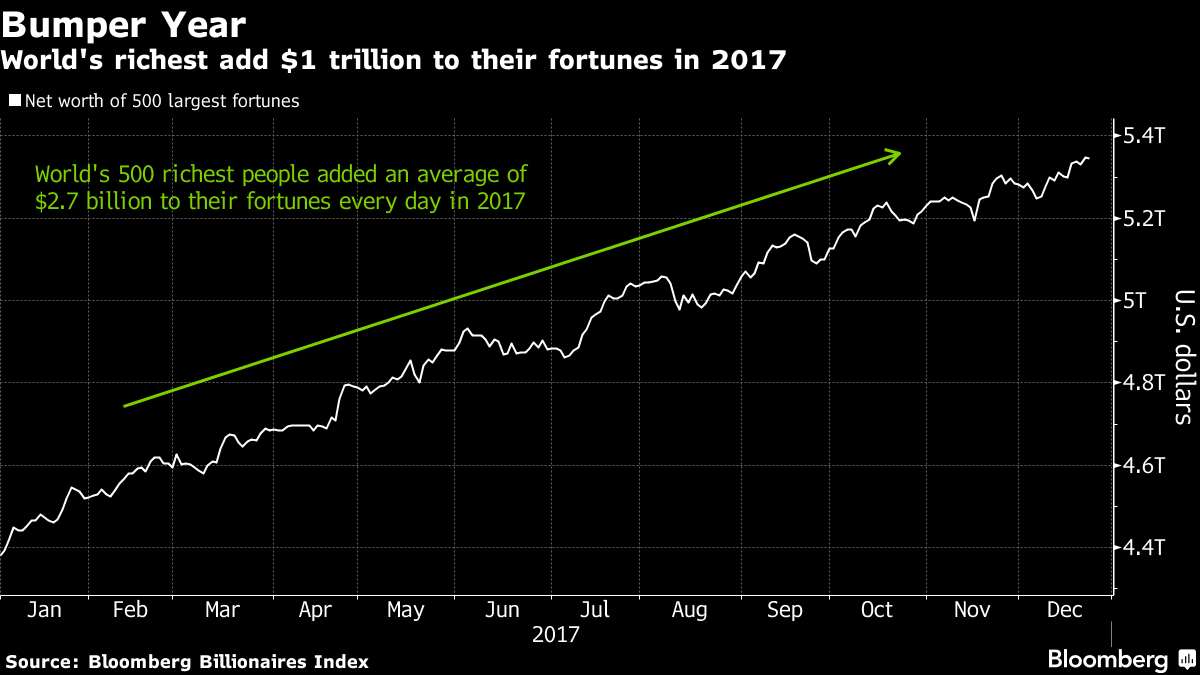
World's Wealthiest Became $1 Trillion Richer in 2017 (Bloomberg.com)

Gold Prices (LBMA AM)

27 Dec: USD 1,285.40, GBP 958.78 & EUR 1,081.54 per ounce
22 Dec: USD 1,268.05, GBP 947.74 & EUR 1,069.85 per ounce
21 Dec: USD 1,265.85, GBP 945.97 & EUR 1,065.09 per ounce
20 Dec: USD 1,265.95, GBP 944.27 & EUR 1,068.21 per ounce
19 Dec: USD 1,263.10, GBP 944.93 & EUR 1,070.10 per ounce
18 Dec: USD 1,258.65, GBP 943.11 & EUR 1,067.71 per ounce
15 Dec: USD 1,257.25, GBP 937.41 & EUR 1,065.52 per ounce

Silver Prices (LBMA)

27 Dec: USD 16.50, GBP 12.30 & EUR 13.87 per ounce
22 Dec: USD 16.18, GBP 12.08 & EUR 13.65 per ounce
21 Dec: USD 16.15, GBP 12.08 & EUR 13.61 per ounce
20 Dec: USD 16.19, GBP 12.09 & EUR 13.67 per ounce
19 Dec: USD 16.16, GBP 12.08 & EUR 13.68 per ounce
18 Dec: USD 16.09, GBP 12.04 & EUR 13.64 per ounce
15 Dec: USD 15.99, GBP 11.93 & EUR 13.55 per ounce


Recent Market Updates

- Goldnomics Podcast – Gold, Stocks, Bitcoin in 2018. Everything Bubble Bursts?
- What Peak Gold, Interest Rates And Current Geopolitical Tensions Mean For Gold in 2018
- New Rules For Cross-Border Cash and Gold Bullion Movements
- ‘Gold Strengthens Public Confidence In The Central Bank’ – Bundesbank
- WGC: 2018 Set To Be A Positive Year For Price of Gold and Investors
- Year-end Rate Hike Once Again Proves To Be Launchpad For Gold Price
- UK Stagflation Risk As Inflation Hits 3.1% and House Prices Fall
- Buy Gold, Silver Time After Speculators Reduce Longs and Banks Reduce Shorts
- Bitcoin – Plan Your Exit Strategy Now – Maybe With Gold
- Gold Demand Increases Along with Uncertainty Thanks to Trump, Brexit and North Korea
- UK Pensions Risk – Time to Rebalance and Allocate to Cash and Gold
- Bailins Coming In EU – 114 Italian Banks Have NP Loans Exceeding Tangible Assets
- Silver’s Positive Fundamentals Due To Strong Demand In Key Growth Industries

Tuesday, December 26, 2017

The Bitcoin Effect, Gold and Silver Report 24 Dec 2017

Published here: http://www.zerohedge.com/news/2017-12-26/bitcoin-effect-gold-and-silver-report-24-dec-2017

Merry Christmas to our American friends. Happy Christmas to the rest of the Anglosphere. Felicem natalem Christi to our Latin-speaking audience, and góðr jól to those who are reviving Old Norse as a great language!

Let’s address two themes about the gold price trend that are increasingly in popularity the past few months—as the price of gold has been falling. Blame bitcoin. And blame rising interest rates.

There is no direct mechanism—no arbitrage—that pushes up bitcoin and down gold. As there is, for example, with changes in relative palladium or platinum demand if diesel engines gain or lose market share from gasoline engines.

Nor do we give truck to the idea that the dollar has been pushed from ?1.00 to ?0.000053 (we don’t think even the bitcoin bugs who say it, really believe it). What are you going to believe: a B.S. theory, or your own lying eyes?

There is arguably an indirect bitcoin-gold price connection mechanism. Those who own gold for the price appreciation may be attracted to bitcoin. While gold does not seem to be going up, bitcoin obviously is. If someone wants to make dollars quick, bitcoin sure seems to be a better vehicle to ride than gold.

However, we think bitcoin’s effect on the gold price is likely, if anything, to be in the other direction. For everyone selling gold to buy bitcoin, there are surely two who made big bucks in bitcoin and want to diversify into gold. With the price up so much, many people are sitting on 20X gains (or more). In order for new people to buy, SOMEone has to be selling. We think it is likely the diversification trade. It certainly is not anyone saying to himself, “well now that bitcoin has hit my price target, it is fully valued and I am out.”

Gold would be the logical diversification asset, for those seeking anti-Fed money. Once someone becomes aware of the problem with the dollar, which most bitcoin owners are, he will not become unaware. He will be looking for other alternatives. Gold is not only not a dollar, but it is not the wild ride of bitcoin either. For that portion someone wants to take off the table, gold’s stability is a feature, not a bug. The more that bitcoin rises, the more people have more capital to take off the table.

One could call this a kind of reflexivity, where bitcoin’s rising price tends to drive a rising price of gold. And this is likely a ratchet; a bitcoin crash does not seem likely to cause selling of gold to buy bitcoin.

It is a fact that the gold price has been in a downtrend since September (though the price picked up the last week and a half). If not bitcoin, what is the driver?

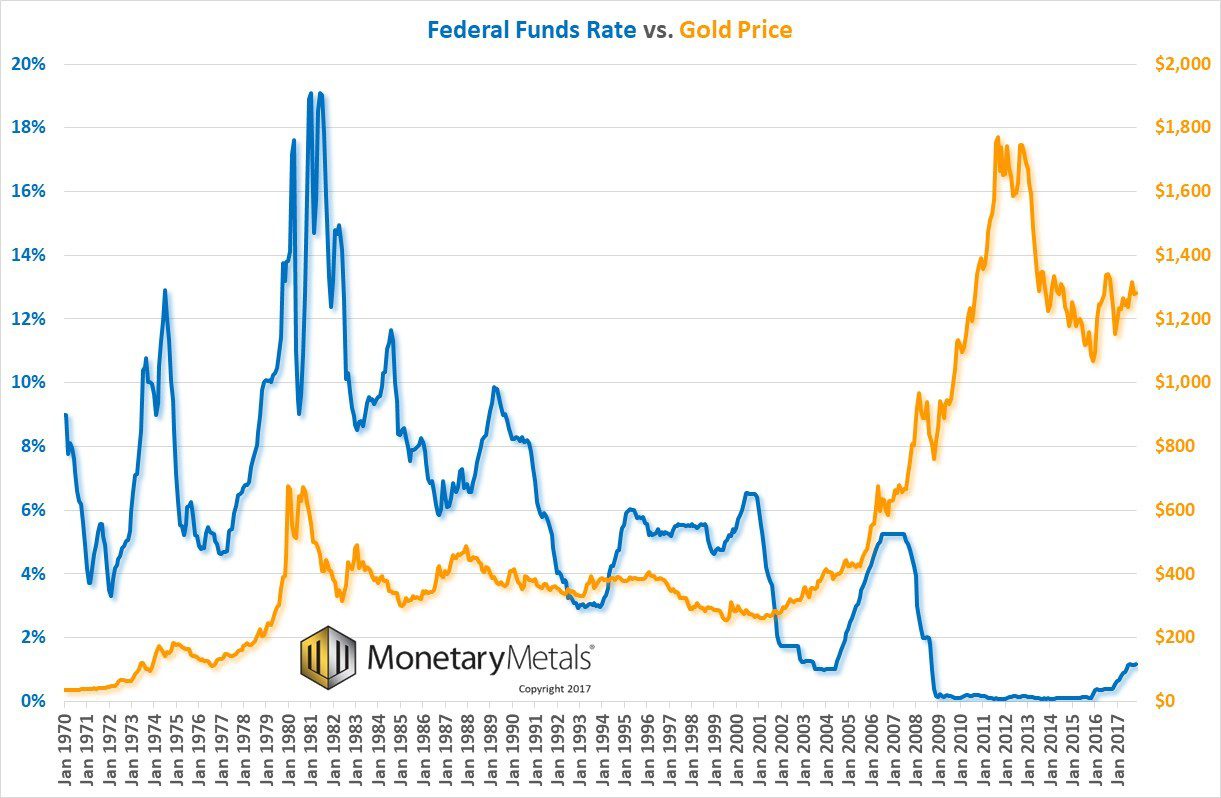
We have written a number of pieces on the topic of interest rates and the gold price (bottom line: there is no clear correlation). Let’s not forget that the gold price was rising in the 1970’s while the rate was rising, and again in the 2000’s while it was falling. Here is a graph of the Fed Funds Rate and the gold price from 1970.

There looks like a correlation while the Fed Funds Rate was rising in the 1970’s. But it is hard to argue that they’re correlated during the big run up in price from 2000 through 2011. This could mean that rising rates causes a rising price, while falling rates do not cause a falling price. Or it could mean something else.

At this point, many would say it’s not the nominal but the real rate. If you add apples, oranges, rent, fuel, etc. you get a hypothetical measure of consumer prices. No one agrees on what should go in to the basket, or the weights given to each item (some people eat more apples than others). But change in consumer prices gives us inflation. So we use hypothetical inflation to adjust the actual rate at which lending occurs. The adjusted number, is called the real rate, apparently without intending any irony.

Perhaps people buy gold when the real rate is rising or falling or too high or too low?

We think that real rate is the wrong concept. The inflation number is rather arbitrary, and it’s invalid to subtract consumer prices from interest. It’s wrong to ignore the rate at which actual lending occurs in favor of a rate at which lending does not occur. And finally, it’s wrong to try to measure money (or even irredeemable currency) in consumer prices. Do feel free to try this at home. How many rubber bands long is your child’s plastic yard stick?

However, there’s a grain of truth in that, which should be identified explicitly. Time preference is that grain of truth. Central banks can manipulate the market interest rate. For proof, just look at a long-term historical chart of the interest rate on the 10-year Treasury bond. There is an obvious difference between pre- and post-Fed.

However, central banks cannot manipulate the time preference of the people.

In a normal world, interest must be greater than or equal to time preference. Central banks turn normalcy upside down, literally. They can invert the time preference – interest spread.

Time preference, by the way, can change too. Not by central planners’ diktats, but in response to changes in the market. For example, people who have little debt in a market of skyrocketing consumer prices will increase their time preference. Whereas people who are loaded up with debt in a lethargic or falling market decrease their time preference.

The upshot of this is that interest at 10% might, at one time, be totally insufficient. And another time, interest of 2% might be more than enough. One would be hard-pressed to plot a graph showing time preference against interest. It’s certainly much easier to plot interest – inflation.

We would suggest that people are impelled to buy gold much more when their time preference is violated by too-low interest rates. And less inclined (or even induced to sell) when interest is above time preference.

Well, today, we have rising rates (at least short-term rates, the long bond is a different story). And yet debt saturation is not changing any time soon. It could be that the Fed is now giving people an inducement to give up their gold: restoring some interest to paper, even if only a small amount.

If so, then we are obliged to mention that we offer A yield on gold, paid in gold.


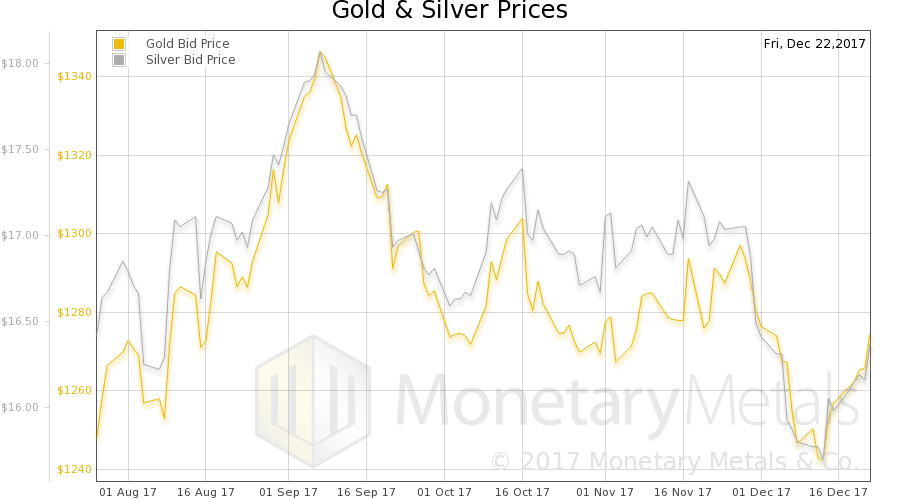
The prices of the metals moved up $29 and $0.34 respectively. As typically occurs, the price of silver moved more in proportion.

Let’s look at the only true picture of the supply and demand fundamentals of both gold and silver. But first, here are the charts of the prices of gold and silver, and the gold-silver ratio.

Next, this is a graph of the gold price measured in silver, otherwise known as the gold to silver ratio. The ratio dropped.

In this graph, we show both bid and offer prices for the gold-silver ratio. If you were to sell gold on the bid and buy silver at the ask, that is the lower bid price. Conversely, if you sold silver on the bid and bought gold at the offer, that is the higher offer price.

For each metal, we will look at a graph of the basis and cobasis overlaid with the price of the dollar in terms of the respective metal. It will make it easier to provide brief commentary. The dollar will be represented in green, the basis in blue and cobasis in red.

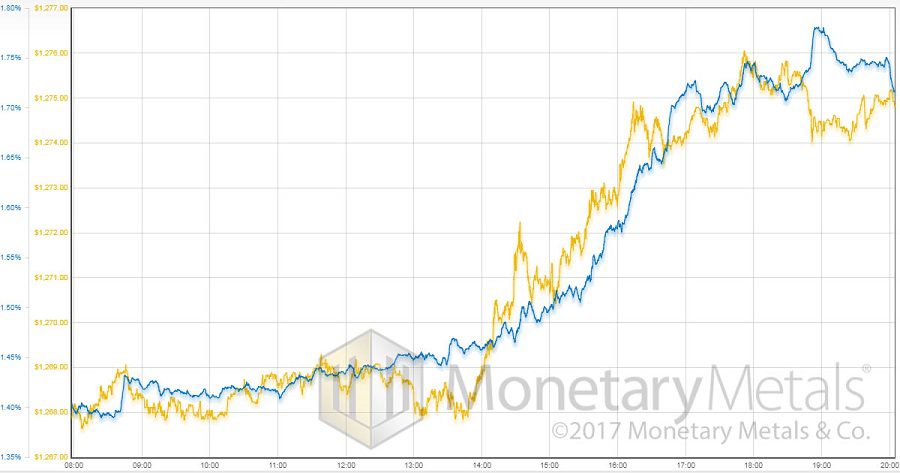
Here is the gold graph showing gold basis and gold price on Friday, as there was some interesting price action.

What a nice correlation between price and basis (until late in the day). We hold our breaths, waiting for conspiracy theorists to argue that this is manipulation. Whether it is, or isn’t, it is buying of futures and it pushed up the price of gold.

Despite the rise in market price, our Monetary Metals Gold Fundamental Price fell $35 this week, to $1239.

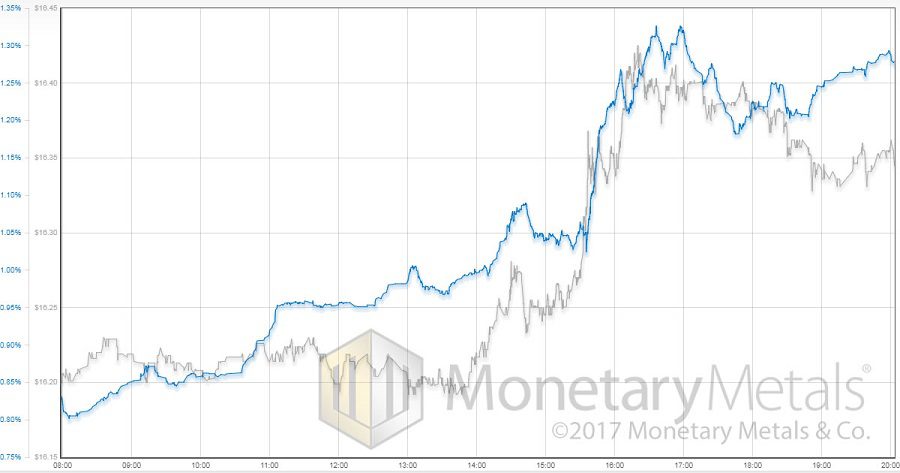
Now let’s look at silver.

We see the same thing. A beautiful correlation between price and basis. Yessiree, it’s the naked longs buying silver futures on leverage, planning to make dollars when the price rises.

The Monetary Metals Silver Fundamental Price dropped 25 cents from last week, to $16.12.


© 2017 Monetary Metals

Saturday, December 23, 2017

Twelve Days Of Christmas Fed’s QE Gave To Me – by Michael Carino, Greenwich Endeavors

Published here: http://www.zerohedge.com/news/2017-12-23/twelve-days-christmas-fed%E2%80%99s-qe-gave-me-%E2%80%93-michael-carino-greenwich-endeavors

On the 12th day of Christmas Fed’s QE Gave To Me:

TWELVE Fed
Districts Dancing

ELEVEN Bubbles
Bubbling - (11 – Crypto Currencies like the recently famous soon to infamous
Bitcoin, Bonds (every one of them), Stocks, Intra-day leverage from high volume
trading, Emerging Markets, Short Volatility Trades in a temporarily suppressed
volatility environment, Liquidity Risk from enormous Alternative Funds – LTCM was
only 4bl, a fraction of the current day behemoths, Spread Products, Farm Land,
Commercial Real Estate, Residential Real estate, Yellen’s Champagne Flute)

TEN th Year US
Economy Expanding - (longest expansion ever!?!)

NINE Trillion
Treasuries Issued – (only 5 Trillion existed in 2008, now 14 Trillion!!!)

EIGHT High
Frequency Treasury Trading Hedge Funds – (In 2015 BrokerTec published a list of
interdealer market Treasury trading volumes showing 8 of top ten traders by
volume were hedge funds, not dealers. This represented up to 70% of Treasuries
traded.  In a market that can have daily
volumes of 1 Trillion when incorporating cash and futures markets – dictated by
high volume traders that manipulate prices –– yet somehow the world believes
yields reflect a consensus outlook for growth and inflation instead of the will
of 8 traders – is no different from the Hunt Brothers cornering the silver
market.  This ended catastrophically for
the Hunt brothers and the silver market.  High volume strategies by a few are currently
cornering the Treasury market and therefor the global bond market.  As the strong economic fundamentals make
current low yield levels look comical and cash rates rise high enough to
encourage rotation away from bonds, this manipulation will collapse and along with
it bond prices.)

SEVEN Hundred
Billion Federal Budget Deficit (potentially going to 1 Trillion in 2018 with
the new tax reductions passed)

SIX Central Banks
Pursued QE (US, UK, Switzerland, EU, Japan and China all pursued quantitative easing
programs in order to monetize debt, competitively depreciate their currency for
trade advantages and fund at subsidized rates ever expanding government
deficits that normally lead to soaring interest rates)

FIVE Fed Funds
rate hikes (at this pace there will be five more years of hikes and one heck of
a bubble to burst –if the monetary policy insanity lasts five more years, the
global financial and economic system will be imperiled)

FOUR Trillion
Bonds on the Fed’s Balance Sheet (was only appx. 700 billion in 2008, now 4.4
trillion!)

THREE Egg Nogs
for Big Ben (Academics love to party and Fed Chairman Bernanke, as the father
of excessive and highly impaired QE policies, had all the Fed members over-imbibing)

TWO Dissenting
Doves – (Fed Presidents Evans – Chicago and Kashkari – Minneapolis both want to
revel into the new year and voted not to raise rates and continue to normalize
Fed policy at the recent December 17 Federal Reserve meeting. It was rumored
they were overheard calling Yellen a Grinch!)

AND A Powell In the
Fed’s chair seat – (Jerome Powell will replace Fed Chair Yellen February 3,
2018. A prior article I wrote, will Trump dance or be a dunce is looking like
he has his dancing shoes on. Let’s stay in the holiday spirit and dance the
night away with a new Fed Chairman that will stick with the status quo and keep
the party going!  Chairman Greenspan decided
to keep the party going at all costs and let the music stop on someone else’s
watch.  This practice has been followed
by Chairman Bernenke and Chairman Yellen. 
Chairman Powell now seems prepared to practice what everyone else
preached. Let’s do whatever it takes, regardless of future economic costs (and
these costs will be catastrophic) and let this monetary policy experiment end
with a thundering boom on the next person’s watch!


by Michael Carino, Greenwich Endeavors, 12/23/17

Michael Carino is the CEO of Greenwich Endeavors and has
been a fund manager and owner for more than 20 years.  He has positions that benefit from a
normalized bond market and higher yields. 


It's A Wonderful Life Is A Wonderful Lesson To Hold Gold Outside of The Banking System

Published here: http://www.zerohedge.com/news/2017-12-23/its-wonderful-life-wonderful-lesson-hold-gold-outside-banking-system

It's A Wonderful Life Is A Wonderful Lesson To Hold Gold Outside of The Banking System

- Christmas film serves as reminder that savings are not guaranteed protection by banks
- Savers are today more exposed to banking risks than ever before
- Gold and silver investment reduce exposure to counterparty risks seen in financial system
- Basket of Christmas goods has climbed since 2016 thanks to 11% climb in gold price



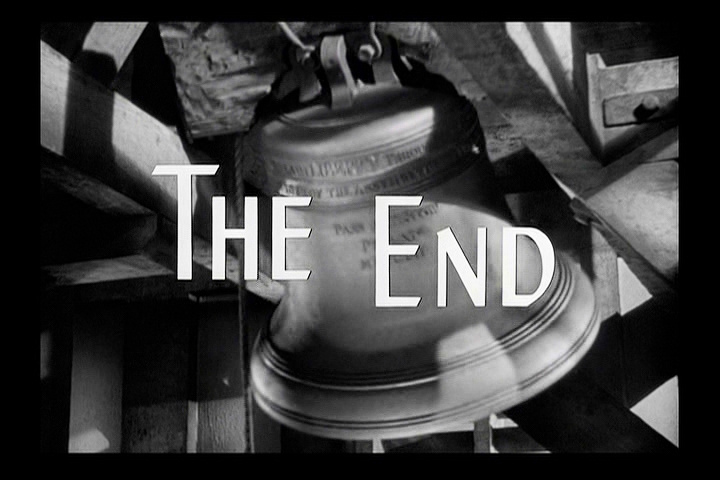
Frank Capra's 1946 film It's A Wonderful Life is one that many families will be settling down to watch this Christmas weekend. A story that is ultimately about a suicidal man is one of the most watched holiday films of all time.

Interestingly it wasn't all that big a hit upon its release (despite garnering five Academy Award nominations) and was disliked by some of the highest intelligence authorities and political thinkers.

Ayn Rand worked with the FBI to identify Hollywood Communist propaganda and helped them to conclude that the Christmas film contained several subversive tendencies, including "demonising bankers" and "attempting to instigate class warfare", and was "written by Communist sympathisers".

'Demonising bankers' is an interesting accusation and one that doesn't have to come from an anti-communist perspective. In the 70-odd years since the film's release there has been a growing level of evidence for bankers (and banks) to absolutely be demonised.

There are some important lessons to be learnt from the film's protagonist George Bailey. For us the main takeaway for cautious investors and savers is in reference to trusting banks and deposit companies with your hard earned cash.

It is a lesson on how exposing your wealth to various counterparties is exposing it to an incalculable level of risk. Furthermore it should be a lesson on the importance of having savings and learning how best to protect them.

"The money's not here"

A famous scene early on in the film sees James Stewart's George Bailey confront a mob of customers who are demanding their money back from his Bailey Building and Loan community bank. It is implied that there is an larger economic crisis going on and Bailey's savers are panicking about the security of their assets.

Bailey tells them that they can't have their money for at least two months.

...you’re thinking of this place all wrong.
As if I had the money back in a safe. The money’s not here.
Your money’s in Joe’s house...that’s right next to yours.
And in the Kennedy House, and Mrs. Macklin’s house, and, and a hundred others. Why, you’re lending them the money to build, and then, they’re going to pay it back to you as best they can.

Whilst Bailey's bank is unlikely to operate using a fractional reserve system the lesson for depositors today is the same. At a simple level our banking structure and finances are deeply interwoven so when a bank, big or small, fails, lots of people will feel the pain.

Viewers should pay attention to this quick lesson in economic fragility. It's a Wonderful Life shows that the economy at both a national and international level can seemingly change from a healthy position to a dangerous and costly one based on the sort of collective, self-fulfilling beliefs that John Maynard Keynes called "animal spirits".

For those of you who have seen the scene of Bailey trying to prevent a run on his bank you will recall how similar his customers' lack of understanding as to how a bank works is similar to the majority of those who use the banking system we have today.

As we saw with the Northern Rock crisis depositors are convinced their money is sitting there in the safe. And, they are sure it is still 'their' money (it isn't). Additionally they fail to question how the banks are able to distribute so much money, such as for mortgages or car loans.

Are the banks and their failures something we should be worried about?

Today a bank run looks quite different to the one we see in It's A Wonderful Life. The sign of a bank run is usually indicated by a long line of people queuing at an item (as per Northern Rock). But, the fear is the same.

The fear and threat of too much leverage in the system is still very real. The fear that one big loss could take down an entire bank and wipe out the life savings of many—is arguably even scarier than it was back in 1948. Bank failures today are far more serious than Depression-era failures.

This is because so many banks are national and international entities, so intertwined with one another. The collapse of Washington Mutual in 2008, triggered by deposit withdrawals, was the largest failure in U.S. banking history.

This year marked ten years since both the start of the financial crisis and the first bank run in the UK in 140 years. The Bank of England, UK government and regulators rushed to salvage what they could. It made little difference, the financial system was terminal. Afterwards then Bank of England Governor, Mervyn King, reflected:

“In the end the big story, when you look back 10 years, is none of this made any difference at all to the ultimate outcome of what was wrong with the banking system...Whatever we did made no difference to the fact that in the autumn of 2008 the entire banking system failed. Although Northern Rock was a great story in the UK it was little more than a bubble on the boiling sea of the failure of the banking system crisis in 2008.”

In a major critique of the stress tests carried out on UK banks Kevin Dowd, a professor of finance and economics at Durham University writes, “The stress tests are about as useful as a cancer test that cannot detect cancer. They seek to demonstrate a financial resilience on the part of UK banks that simply isn’t there...Our banking system is an accident waiting to happen..“It is disturbing that 10 years on from Northern Rock, the best measures of leverage – those based on market values – indicate that UK banks are even more leveraged than they were then,”

Savers more exposed than ever

Savers are exposed to the huge leverage in the system partly thanks to the huge pensions and debt time bombs that are just looking for a spark to light their short fuse.
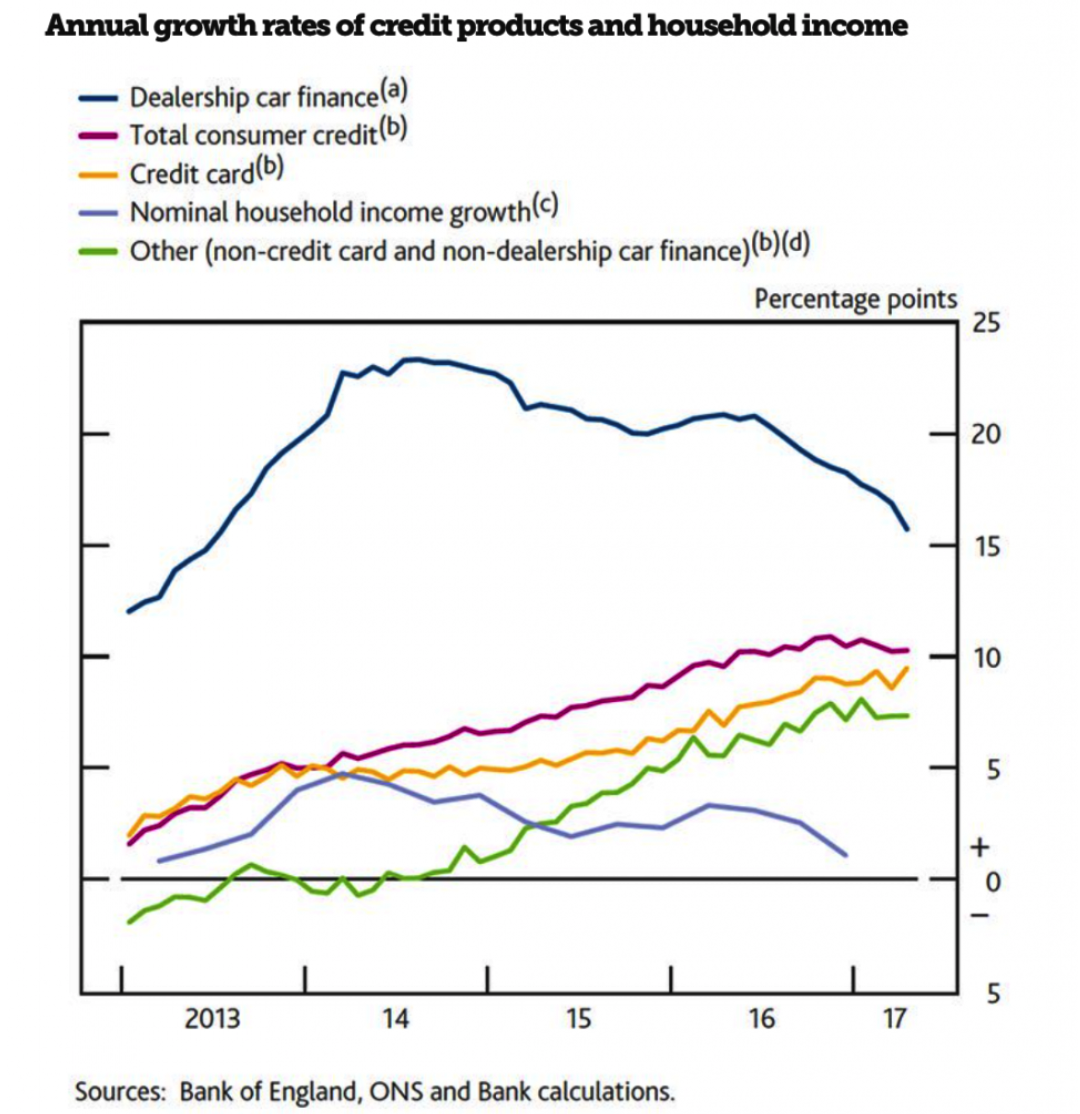
Currently in the UK savers are exposed to a £1 trillion debt time bomb hanging over the country. We are nearing the end of the timebomb’s long fuse and it looks set to explode in the coming months.

It is made up of two major components.

  • £710 billion is the terrifying size of the UK pensions deficit
  • £200 billion is the amount of dynamite in the consumer credit time bomb

Why is this?  It's because we apparently didn’t learn from the massive man made crisis that was the 2008 financial crisis.

The ‘we’ is referring to UK individuals who are holding over £1.5 trillion of household debt. It refers to the pension fund managers who are ignoring the fact they hold more liabilities than assets. It refers to banks and mortgage and loan providers who give loans to people who are already indebted and who will struggle to pay the debt back. It refers to a compliant media who do not have ask hard questions about irresponsible lending practices and cheer lead property bubbles due to getting significant revenues from the banking and property sectors.

And, ultimately the ‘we’ is the government who peddled such terrible monetary policy that it has brought us as close to nuclear financial disaster as we have been since 2008.

Risks from all sides for savers

Sadly it is not just struggling borrowers and pensioners who are exposing savers to increased risks and expense. 10 million savers here in the UK have been royally screwed over by a government announcement that they will be taxed on their savings.

Buried deep in the 2017 Autumn budget is a a £1.8billion stealth tax raid, discovered by Royal London who explain:

'...one group of victims of the tax increase will be those who have savings products such as endowments and 'whole of life' policies with insurance companies. Under current rules, when these investments grow, tax is paid only on the 'real' return, stripping out the effects of inflation. This tax is collected by the insurance companies and passed on to the government. But from January 2018 tax will be payable on the whole return, including anything which simply keeps pace with inflation. Royal London estimates that this could affect up to three million of its own policy holders and many millions more across the whole insurance sector. Yet the Treasury documents accompanying the announcement wrongly claim that it has 'no impact on individuals or households'...This is a 'stealth tax' on millions of people who have made sacrifices and saved hard and are now penalised with extra tax.'

Even if you don't have one of the affected financial products you are still being screwed over by the banks. Interest rates in the UK have been increased to 0.5% in recent months. One would naturally expect to feel the benefit of this should they have savings. However, research by the Daily Mail's money arm found that  'hardly any savers in popular easy-access accounts or in easy-access cash Isas with Barclays, NatWest, RBS, Lloyds, HSBC, Halifax and Santander have benefited from the full rise.' Many will experience just a sixth of the rate hike seen last month.

What with the tax liability, inflation and negative real rates of interest it is of little question that savers are exposed to risks. The ECB doesn't care too much about this though and is looking to use individuals' savings to help prop up the banking system thanks to unprotected deposits and bank bail-ins.


So it seems there is little savers can do rather than look out for number one.

It's a Wonderful Life or It's a Horrible Mess?

With best wishes I do hope you really do wake up to think that It's a Wonderful Life. But beyond the Christmas cosiness of your own home it really is seemingly a Horrible Mess.

According to the PNC's calculations the true cost of the Twelve Days of Christmas basket climbed by 0.7% when (US) inflation-adjusted. The main culprits were the Pear Tree, the Lords-a-leaping and the Five Gold Rings.

Of those three it was the Gold Rings which saw the biggest increase in price this last year thanks to gold climbing by over 11% in the last twelve months. This is something to take advantage of and to ensure that yours can be a Wonderful Life and not one of the holiday kind.

Savers and prudent spenders can do very little about the current mess of things. All we can do is protect our own finances. This isn't something to be done by rushing to the bank when things go wrong in the hope that you'll be able to withdraw all of your money by some miracle.  The level of debt in the financial system in the UK and most western countries is completely unsustainable.

For the majority of savers this means personal finances and savings held in deposit accounts are at risk from banks' over-leveraging. This in turn puts them at risk of bail-ins. Bank bail-ins and negative rates seem increasingly inevitable.

Make sure your savings are not exposed to these risks by diversifying into counterparty risk free gold and silver coins and bars for insured delivery and secure storage.


Related reading

Why Surging UK Household Debt Will Cause The Next Crisis

UK Pensions and Debt Time Bomb: £1 Trillion Crisis Looms

Protect Your Savings With Gold: ECB Propose End To Deposit Protection


News and Commentary

Gold holds steady as U.S. data leaves dollar stable (Reuters.com)

Gold struggles for direction as investors sort out tax-cut implications (MarketWatch.com)

U.S. third-quarter economic growth trimmed; jobless claims rise (Reuters.com)

Leading economic indicators rise 0.4 percent, meet expectations (CNBC.com)

FHFA: Home prices continue to soar on West Coast (HouseingWire.com)

Source: Bloomberg

Ted Butler: A 10-year-deal to let JPM rig silver? (Gata.org)

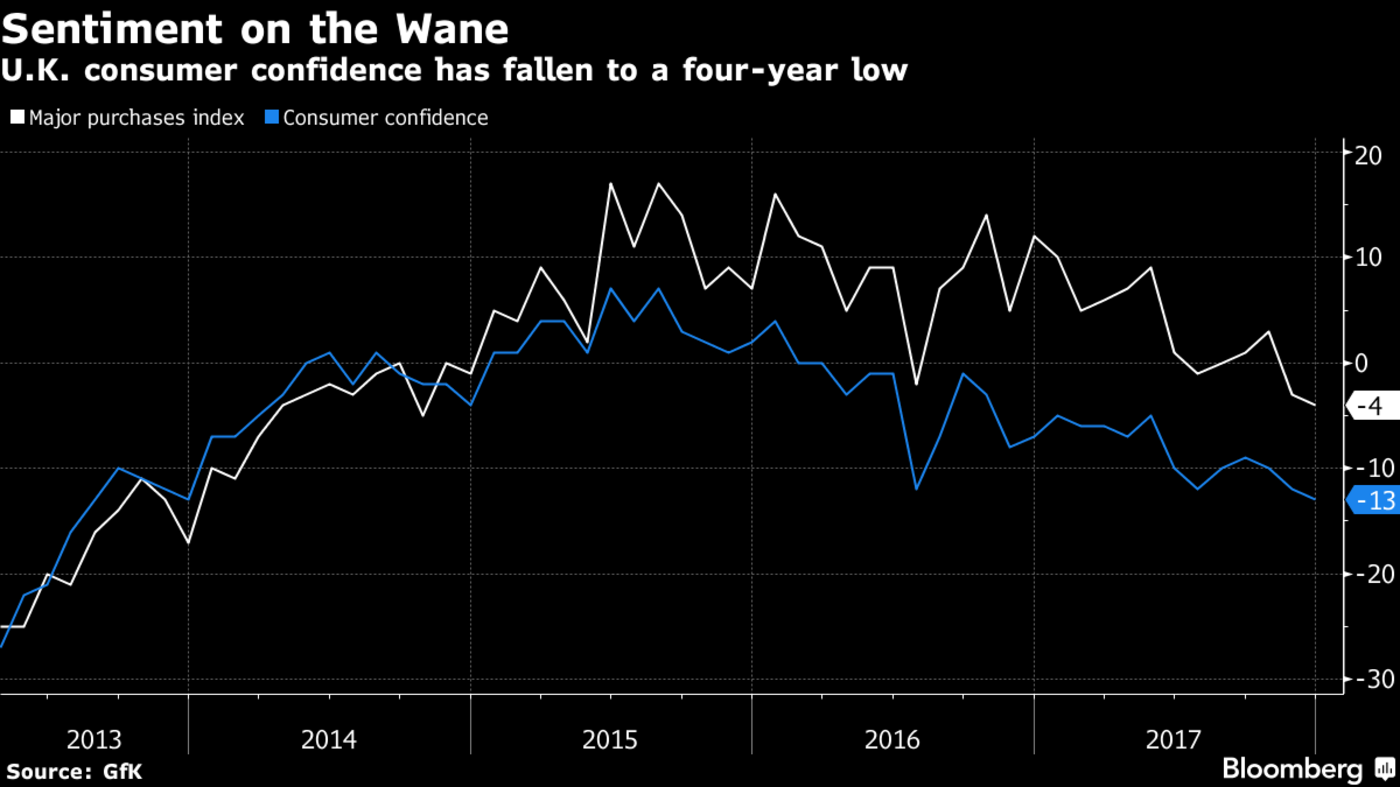
U.K. Consumer Confidence Hits a Four-Year Low (Bloomberg.com)

This Dollar Shortage Isn’t Likely to Last (Bloomberg.com)

WATCH: Chinese Gold Market Developments and Insights (Youtube.com)

Bitcoin is No Substitute for Gold, says CNBC Mad Money Host Jim Cramer (CryptoVest.com)

Gold Prices (LBMA AM)

22 Dec: USD 1,268.05, GBP 947.74 & EUR 1,069.85 per ounce
21 Dec: USD 1,265.85, GBP 945.97 & EUR 1,065.09 per ounce
20 Dec: USD 1,265.95, GBP 944.27 & EUR 1,068.21 per ounce
19 Dec: USD 1,263.10, GBP 944.93 & EUR 1,070.10 per ounce
18 Dec: USD 1,258.65, GBP 943.11 & EUR 1,067.71 per ounce
15 Dec: USD 1,257.25, GBP 937.41 & EUR 1,065.52 per ounce
14 Dec: USD 1,255.60, GBP 935.67 & EUR 1,062.49 per ounce

Silver Prices (LBMA)

22 Dec: USD 16.18, GBP 12.08 & EUR 13.65 per ounce
21 Dec: USD 16.15, GBP 12.08 & EUR 13.61 per ounce
20 Dec: USD 16.19, GBP 12.09 & EUR 13.67 per ounce
19 Dec: USD 16.16, GBP 12.08 & EUR 13.68 per ounce
18 Dec: USD 16.09, GBP 12.04 & EUR 13.64 per ounce
15 Dec: USD 15.99, GBP 11.93 & EUR 13.55 per ounce
14 Dec: USD 16.01, GBP 11.92 & EUR 13.54 per ounce


Recent Market Updates

- Goldnomics Podcast – Gold, Stocks, Bitcoin in 2018. Everything Bubble Bursts?
- What Peak Gold, Interest Rates And Current Geopolitical Tensions Mean For Gold in 2018
- New Rules For Cross-Border Cash and Gold Bullion Movements
- ‘Gold Strengthens Public Confidence In The Central Bank’ – Bundesbank
- WGC: 2018 Set To Be A Positive Year For Price of Gold and Investors
- Year-end Rate Hike Once Again Proves To Be Launchpad For Gold Price
- UK Stagflation Risk As Inflation Hits 3.1% and House Prices Fall
- Buy Gold, Silver Time After Speculators Reduce Longs and Banks Reduce Shorts
- Bitcoin – Plan Your Exit Strategy Now – Maybe With Gold
- Gold Demand Increases Along with Uncertainty Thanks to Trump, Brexit and North Korea
- UK Pensions Risk – Time to Rebalance and Allocate to Cash and Gold
- Bailins Coming In EU – 114 Italian Banks Have NP Loans Exceeding Tangible Assets
- Silver’s Positive Fundamentals Due To Strong Demand In Key Growth Industries


Important Guides

For your perusal, below are our most popular guides in 2017:

Essential Guide To Storing Gold In Switzerland

Essential Guide To Storing Gold In Singapore

Essential Guide to Tax Free Gold Sovereigns (UK)

Please share our research with family, friends and colleagues who you think would benefit from being informed by it.